So you've decided to try cross stitch. Maybe you saw a stunning finished piece online, or a friend showed off their latest project and you thought, "I could do that!" Now you're browsing around and keep seeing cross stitch kits everywhere, but you're not quite sure what you actually get inside one of those pretty little boxes.
Don't worry, you're in the right place. Cross stitch kits are one of the best ways for beginners to get started because everything you need is bundled together in one convenient package. But lately, digital cross stitch designs have been growing in popularity too, and it can be a little confusing to understand the difference between the two options.
In this post, we're breaking it all down for you. You'll learn exactly what a traditional cross stitch kit includes, how digital designs compare, and what the pros and cons of each option are. By the end, you'll have a clear picture of which route makes the most sense for you and your first stitching adventure. Let's dig in!
What Is Actually in a Cross Stitch Kit?
Opening a cross stitch kit for the first time feels a little like unboxing a tiny creative toolkit, and that excitement makes sense. Kits represent the single largest product segment in the cross stitch market, making up 36% of global cross stitch sales. So what exactly comes inside?
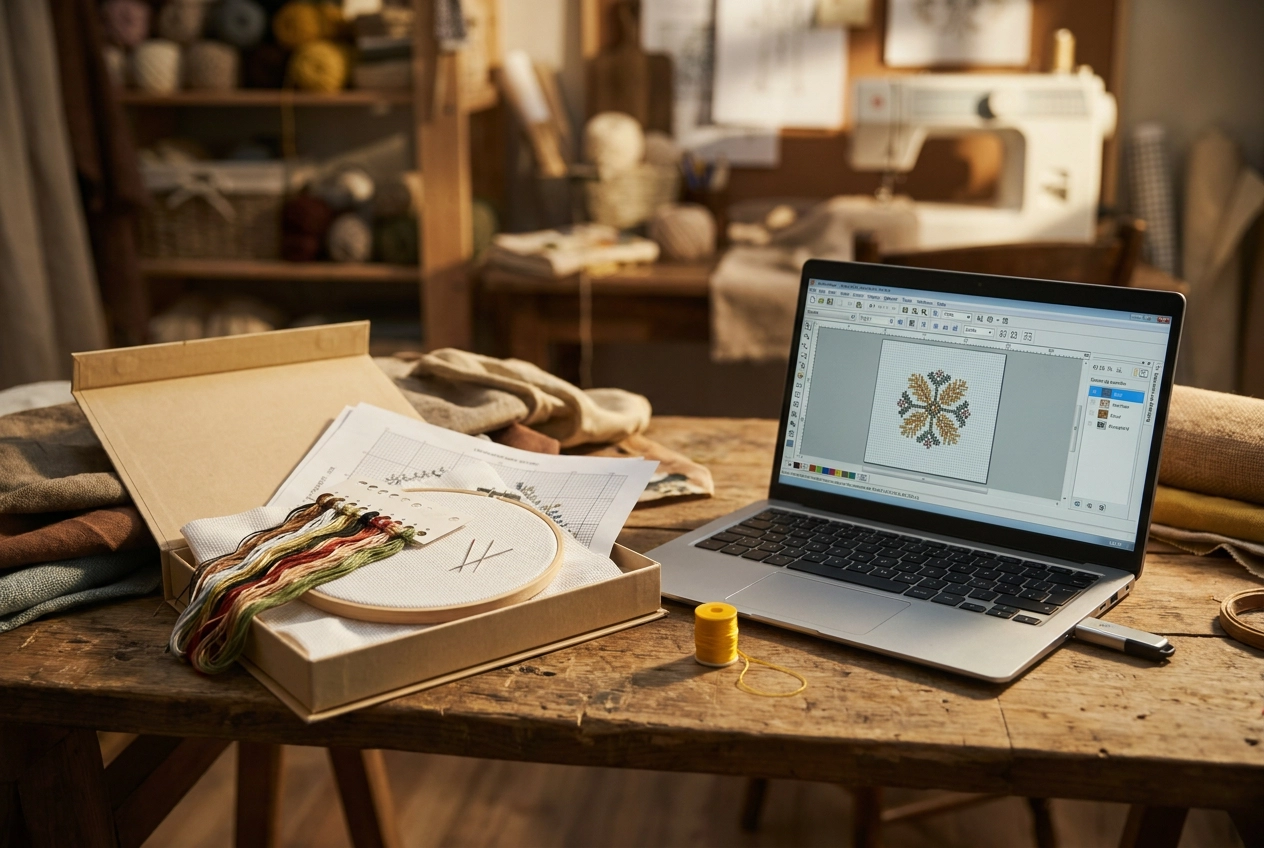
Most beginner kits include four core items. You get a piece of Aida fabric (the grid-weave cloth you stitch onto), embroidery floss sorted by color, a blunt tapestry needle, and a printed pattern chart with a color legend. Some kits also toss in a small embroidery hoop, which holds your fabric taut while you work. The hoop is helpful but not always included, so it is worth checking the product listing before you buy.
What to Look For as a Beginner
Fabric count matters more than most beginners realize. Aida comes in different thread counts, and 14-count is the sweet spot for new stitchers; the holes are large enough to see clearly without squinting. Anything higher, like 18-count or 28-count, produces finer stitches but is noticeably trickier to work with. On the pattern side, check two things: stitch count complexity (fewer stitches equals a faster, simpler project) and whether the color legend is clearly marked with distinct symbols matched to thread numbers. A muddy or confusing chart will slow you down fast.
How Price Affects Kit Quality
Budget kits often include polyester thread and stamped (pre-printed) fabric designs. Mid-range kits step up to DMC or Anchor cotton floss, which is colorfast, easier to separate into strands, and far more pleasant to work with. They also tend to feature original artwork rather than generic clip-art patterns. You generally get what you pay for here.
The Machine Embroidery Difference
Here is where things get interesting. In machine embroidery, the word "kit" means something completely different. Instead of a box of physical supplies, a machine embroidery kit is a downloadable design file you load directly into your embroidery machine. The machine does the stitching for you, automatically, onto fabric you supply separately. No hand-threading, no color sorting, no counting squares on a chart.
That brings up the single most important question to ask yourself before you buy anything: do you want to stitch by hand, or do you want a machine to stitch for you? Both approaches produce beautiful cross-stitch-style results. Hand stitching is meditative and low-cost to start. Machine embroidery is faster, scalable, and opens up possibilities for personalized apparel and gifts. Knowing which path fits your goals will point you toward exactly the right type of kit.
Hand Cross Stitch vs. Machine Cross Stitch — A Plain-Language Comparison
If you've been browsing cross stitch kits and wondering why some people talk about embroidery machines instead of needles and floss, you're in the right place. These are two genuinely different approaches to the same X-shaped stitch, and understanding the difference helps you figure out which path makes sense for your goals.
The Hand Stitching Route
Traditional hand cross stitch is a hands-on, stitch-by-stitch process. You work on counted evenweave fabric, most commonly Aida cloth, following a grid-based pattern chart and pulling embroidery floss through the fabric one X at a time. It's satisfying and creative, but it's also genuinely time-intensive. A single 5x7 design can take anywhere from 10 to 30 hours depending on the stitch count and how complex the color work is. That's not a drawback for everyone; plenty of crafters love exactly that slow, meditative pace. But it's worth knowing upfront what you're signing up for.
The Machine Embroidery Route
Machine embroidery cross stitch skips the manual stitching entirely. You load a digitized design file into a home embroidery machine, and the machine replicates that same X-shaped pattern automatically. The file formats you'll hear about most often are .PES (used by Brother machines), .DST (a widely compatible Tajima format), and .JEF (used by Janome). The finished result looks nearly identical to hand work, but the machine completes it in a fraction of the time. According to cross-stitch trend insights for 2026, digital tools and accessible file formats are making machine embroidery easier to enter than ever before.
Cost and Who Each Format Fits
Physical kits typically run around $15 for basic beginner sets and climb to $60 or more for detailed counted designs. Downloadable machine embroidery files sit in the impulse-purchase range, with no shipping cost or wait time involved. You download the file and you're ready to stitch.
Hand stitching suits crafters who want to enjoy the process itself. Machine embroidery fits makers, boutique sellers, and anyone producing personalized gifts or custom apparel who needs consistent, repeatable results fast. Rising raw material and shipping costs in 2026 are also pushing more cost-conscious beginners toward digital downloads as a smarter starting point.
7 Types of Cross Stitch Kits and Designs Worth Exploring
Whether you're just learning to thread a needle or you're ready to run your first embroidery machine file, knowing which category of cross stitch design fits your goals makes everything easier. Here's a look at seven types worth adding to your project list.
1. Beginner Sampler Kits and Starter Designs
If you're brand new to cross stitch, start small and stay simple. The best beginner kits use stamped fabric, which means the design is already printed on the cloth so you never have to count grid squares from a chart. Aim for projects under 1,000 stitches with a limited color palette of five colors or fewer. Functional mini-formats like keychains, bookmarks, and luggage tags are especially beginner-friendly because they typically finish in four to six hours and give you a real sense of accomplishment fast. On the machine embroidery side, simple cross-stitch fill designs use the same low-complexity logic; they run quickly on any entry-level hoop and are a great way to get familiar with how stitch files behave on different fabrics.
2. Holiday and Seasonal Cross Stitch
Seasonal designs are consistently among the top-selling cross stitch categories, and for good reason. Christmas, Halloween, and Easter themes drive purchase cycles throughout the entire year because people plan gift projects weeks or months in advance. A finished piece makes a genuinely memorable keepsake, the kind of framed artwork a recipient actually holds onto. Embroiderynsewing.com carries a wide seasonal design library, and those files translate directly into cross-stitch-style machine embroidery for holiday home décor, ornaments, and giftable apparel.
3. Sports and Team-Themed Designs
Fan apparel and sports-themed gifts represent one of the most searched categories in the entire embroidery space. The pixel-grid structure of cross stitch maps naturally onto team logo treatments and collegiate graphics, making the aesthetic feel at home on jerseys, hats, stadium-inspired décor, and fan gifts. Machine embroidery files styled with a cross-stitch look are a practical choice here because you can stitch the same design repeatedly for a full lineup of team gear without recounting or re-plotting anything by hand.
4. Fandom and Pop Culture Cross Stitch
Anime, cartoon, and entertainment-property designs are among the fastest-growing segments in the cross stitch world right now, with Instagram and Pinterest driving enormous discovery for these styles in 2026. The cross-stitch trends shaping 2026 point toward bold, character-driven designs with vibrant palettes, which is exactly where fandom content thrives. The pixel-like nature of cross stitch makes it a near-perfect medium for cartoon and anime art styles. Embroiderynsewing.com's anime and cartoon design categories are directly aligned with this momentum, giving machine embroidery users instant access to files in these high-demand themes.
5. Nature and Floral Motifs
Florals, botanicals, birds, and garden scenes have anchored the cross stitch world for decades, and they remain evergreen for a reason. These designs work beautifully across a huge range of finished projects, from framed wall art and fabric panels to tote bags and apparel accents. The detail achievable with cross-stitch-style fills is especially well-suited to layered botanical compositions. Machine embroidery files in this category give you the same visual richness with a much faster finish time than hand stitching.
6. Personalized Name and Monogram Designs
Personalization is one of the strongest purchase drivers in the entire gifting category. A stitched name, initial, or date transforms a generic project into something that feels made specifically for the recipient. Machine embroidery fonts and monogram files make this repeatable and fast; you set the name once in your software, and the machine handles the rest without any manual stitch-counting. Embroiderynsewing.com's font library is a practical starting point for anyone building out a personalized gift workflow.
7. Home Décor and Wall Art Styles
Framed cross stitch is having a clear cultural moment in 2026, fitting naturally into the maximalist interior design movement that favors layered, textural, handcrafted elements on walls and shelves. New releases in stamped cross-stitch kits show strong commercial activity in portrait and scenery formats sized for display, confirming that finished-décor cross stitch is a genuine growth area. Machine-stitched versions on pre-stretched fabric panels or ready-made hoops get you to a finished, frameable piece in a fraction of the hand-stitching time. If you want your projects on your wall quickly, this is the category to explore first.
Why Digital Cross Stitch Patterns Are Growing Fast in 2026
Cross stitch is not slowing down. The global market was valued at USD 1.2 billion in 2024 and is projected to climb to nearly USD 2 billion by 2033, growing at approximately 6.5% annually. That kind of steady, sustained growth signals something important: demand for cross stitch content, in every format, is accelerating. North America alone accounts for 38% of global demand, meaning this is not a trend happening somewhere else. It is happening in the same neighborhoods, online communities, and craft rooms where your next project is already taking shape.
Kits and Patterns Together Own Nearly Two-Thirds of the Market
Within the cross stitch market, kits hold the largest product segment at roughly 36%, while patterns account for 28%. Together, they represent almost two-thirds of everything consumers are buying. What that tells you is straightforward: people want guidance, and they want artwork ready to stitch. A downloadable machine embroidery file delivers both in a single file. According to Cross Stitch Kit Market Research Report 2033, digital pattern downloads nearly doubled their share of total pattern sales units between 2019 and 2023, a trend that has continued moving into 2026.
Instant Downloads Are Winning on Price and Convenience
Rising raw material costs and shipping expenses are making physical boxed kits noticeably pricier than they were just a few years ago. Consumers who are budget-conscious are feeling that shift, and many are pivoting toward digital files as a smarter alternative. There is no shipping wait, no damage risk, and no minimum order. You purchase, download, and stitch. Online channels now account for more than half of all cross stitch product transactions, and that number has been climbing consistently for nearly a decade.
Personalization Is What Buyers Actually Want
Generic floral samplers have their place, but today's buyers are searching for something specific. They want their college team's colors, their favorite anime character, or a design that matches their living room palette. No single physical kit brand can stock that level of variety. A large digital catalog can, which is exactly why buyers are searching for downloadable files with increasing frequency. Social media is accelerating this shift considerably. Cross stitch content earns strong algorithmic promotion on Instagram and Pinterest throughout 2026, and communities like the r/CrossStitch subreddit have grown to more than 225,000 members, introducing thousands of new crafters to the hobby every month. Many of those first-time visitors are arriving comfortable with digital purchasing and ready to download immediately.
How to Choose the Right Cross Stitch Design for Your Project
Picking the right design upfront saves you time, materials, and frustration, so it's worth slowing down for a few minutes before you hit download.
1. Start with your end use, not the design itself.
Think about where the finished piece is going before you browse. Gifts with a personal angle, such as monograms, favorite team logos, or holiday motifs, land better than generic patterns because they feel intentional. Home décor projects give you room to go bold: florals, maximalist repeating patterns, and oversized botanicals all work beautifully framed or mounted. Apparel is a different story entirely. When a design needs to survive washing and regular wear, compact and high-contrast artwork holds up far better than fine, detailed fills that can blur or distort over time. Matching the design style to its destination is the single fastest way to avoid a project you're not happy with.
2. For machine embroidery users, format and hoop size are non-negotiable.
Your machine reads only the formats it was built for. Brother machines use .PES, Janome machines use .JEF, and .DST is a widely compatible option that works across many multi-brand setups. Downloading the wrong format means the file simply will not load. Beyond format, check that the design's required hoop size falls within your machine's maximum embroidery field before purchasing. A design digitized for a 6x10 hoop cannot be stitched on a machine that maxes out at 4x4 without additional resizing software.
3. Factor in stitch count when time is tight.
A simple cross-stitch-fill design under 5,000 stitches typically runs in just a few minutes. A dense, detailed design can take anywhere from 15 to 30 minutes per piece. If you're running batch projects or working against a deadline, stitch count is a practical production variable worth checking on every design page.
4. Browse by theme, not by technique.
If you already know you want an NFL team motif, a Christmas design, or an anime character rendered in cross-stitch style, searching by theme inside a category-organized design library gets you to the right file far faster than filtering by stitch type. Most buyers have a subject in mind first, so use that instinct.
5. Go instant when you're ready to stitch now.
Instant-download files from embroiderynsewing.com put you from browsing to stitching in minutes. There's no shipping wait, no back-ordered floss colors, and no kit arriving with missing supplies. You purchase, download, and load the file directly into your machine or software, which is a significant advantage when inspiration hits and you want to act on it immediately.
Start Stitching With the Right Kit or Design for You
Whether you prefer the quiet rhythm of hand stitching or the speed of a machine, there is a clear path forward for you. Physical cross stitch kits are perfect for slow-craft makers who love the tactile process, the portability, and the satisfaction of every stitch placed by hand. Digital machine embroidery files serve a different maker entirely, someone who wants consistent, professional results fast, with the flexibility to run the same design across a dozen pieces without losing quality.
That second path is exactly where embroiderynsewing.com shines. The catalog is organized by theme, so you can browse sports, fandom, seasonal, floral, monogram, and home décor categories and download a file within minutes. No waiting, no shipping costs, no kit running out of floss at the wrong moment.
Head to embroiderynsewing.com and search by category for your next project. Whether you are making a personalized gift, decorating team apparel, or stitching a framed piece for your living room, there is a ready-to-use design waiting for you.
The timing could not be better either. The cross-stitch market is growing steadily through 2026 and beyond, and bold, maximalist styles are trending right now. This is a great moment to start something new or take your current project in a bolder direction.
Conclusion
Whether you go with a traditional kit or a digital design, you now have everything you need to make a confident choice. Here are the key takeaways to remember: kits provide all your materials in one package, making them ideal for beginners; digital designs offer more flexibility and variety, especially if you already have supplies on hand; and both options can lead to beautiful, rewarding finished pieces.
The best starting point is simply the one that fits your budget, your skill level, and how you like to work.
Ready to pick up your needle and thread? Browse a beginner-friendly kit today, or explore digital pattern shops to find a design that truly excites you. The most important step is just getting started. Your first finished piece is closer than you think, and the stitching community cannot wait to welcome you.