
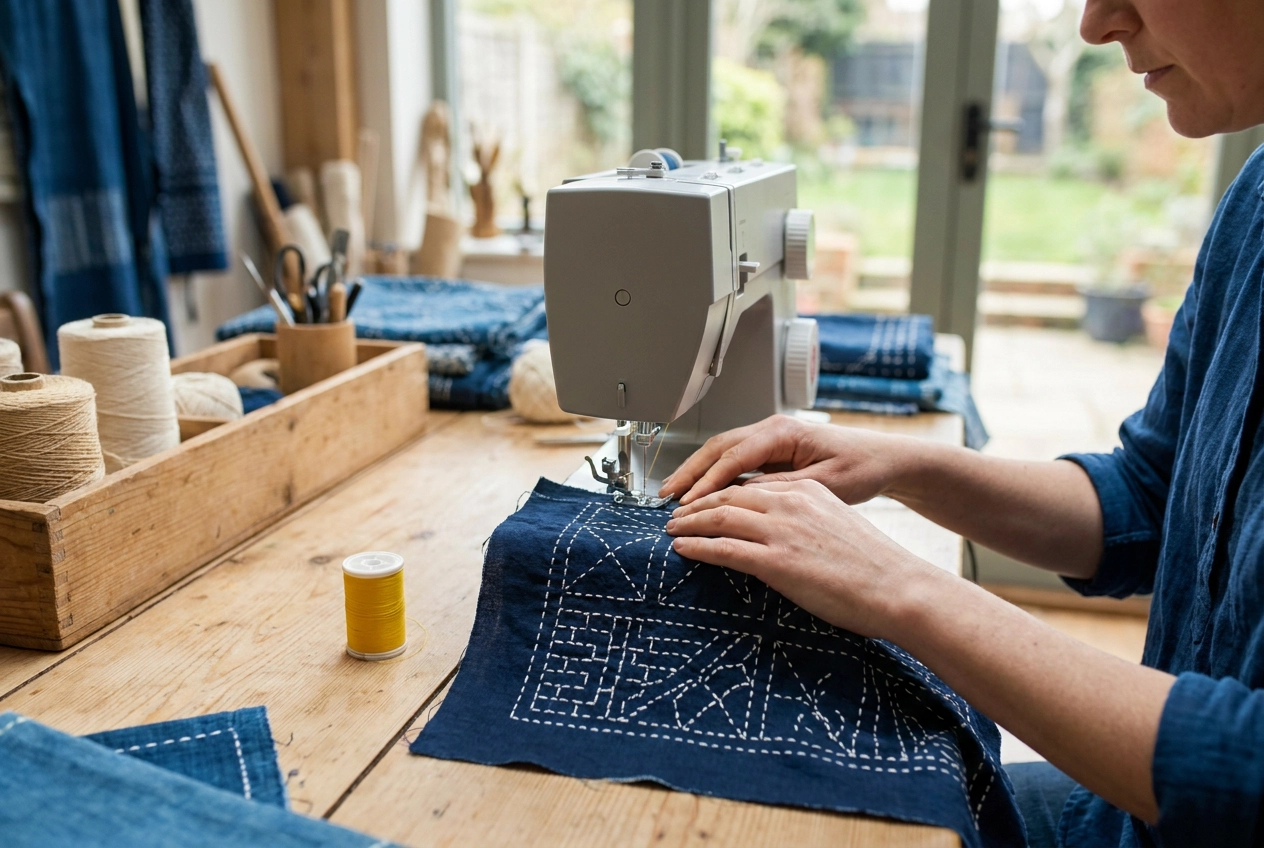
Have you ever fallen in love with a beautiful textile pattern but assumed it was way too complicated to recreate yourself? That's exactly how most people feel when they first discover sashiko embroidery, the stunning Japanese stitching tradition known for its geometric designs and striking indigo-and-white color combinations. Here's the exciting part: you don't need to spend hours hand-stitching to achieve that gorgeous look.
In this tutorial, we're going to explore how you can bring the timeless beauty of sashiko embroidery to life using your sewing machine. Yes, your regular sewing machine! Whether you're completely new to embroidery or just looking for a faster way to create those iconic repeating patterns, this guide is designed with you in mind.
By the time you finish reading, you'll know exactly which materials to gather, how to set up your machine for the best results, and how to stitch your first sashiko-inspired design with confidence. No prior embroidery experience is required, just a little curiosity and a willingness to try something new. Let's get started!
What Is Sashiko Embroidery?
Sashiko is a traditional Japanese embroidery technique that dates back to the Edo period, roughly the 17th and 18th centuries, when it served a deeply practical purpose. Working-class families in rural Japan used simple running stitches worked in thick white cotton thread on indigo-dyed fabric to reinforce worn clothing, mend holes, and layer garments for extra warmth during harsh winters. Fabric was precious and labor-intensive to produce, so nothing was ever discarded. Every scrap was patched, every thin spot was reinforced, and those repairs were made to last. This philosophy of resourceful care even has a name in Japanese: mottainai, meaning roughly "waste not, want not."
The word sashiko itself translates loosely to "little stabs" or "little pierce," a nod to the repetitive, rhythmic needle motion that defines the technique. That simple in-and-out running stitch, worked consistently across a grid of geometric patterns, is both the foundation and the beauty of the craft.
What started as functional repair work quickly became something much richer. Rural Japanese women transformed their stitching into genuine artistic expression, developing patterns inspired by the natural world around them. Designs like Seigaiha (Blue Ocean Waves), Asa No Ha (Hemp Leaf, symbolizing good health), and Nowaki (Blowing Grasses) were passed down across generations and carried real symbolic meaning. Some patterns were even believed to offer protection, with fishermen reportedly wearing certain motifs as talismans. According to A Brief History of Sashiko from Zen Stitching, every pattern carries a name, a backstory, and a connection to Japanese regional life. This is a living tradition with deep cultural roots, not simply a visual aesthetic to borrow freely.
Right now, sashiko is having a genuine moment in the wider craft world, and the timing makes perfect sense. In 2026, embroidery trends are leaning heavily into vintage and retro styles, heritage-inspired techniques, and Japanese cultural aesthetics. Sashiko's bold geometric repeat patterns align naturally with the minimalist line art styles that are dominating embroidery design this year. Add in the growing slow-living movement, where crafters are actively seeking meditative, rhythmic making practices, and sashiko checks every box for what modern makers are craving.
The Hallmarks of Sashiko Design
The technique at the heart of sashiko is called unshin, and it is what gives the craft its meditative rhythm. Rather than piercing the fabric one stitch at a time, you rock the needle back and forth through the cloth, loading several running stitches onto the needle before pulling the thread through in a single smooth motion. The result is a row of evenly spaced stitches that flows across the fabric with a calm, unbroken quality. For beginners, this approach actually feels more natural and forgiving than many Western embroidery methods because the goal is consistent rhythm, not individual stitch perfection.
That philosophy of rhythm carries directly into how sashiko patterns are structured. Every design is built from a geometric repeat unit that tiles across the fabric surface, drawing inspiration from nature and everyday objects. Asanoha (hemp leaf) forms a six-pointed, star-like grid symbolizing growth and vitality. Sankaku uses simple repeating triangles, while Ajiro references woven bamboo with interlocking diagonal lines. Nowaki captures the gentle bend of pampas grass in the wind. Regional variations across Japan's northern farming and coastal communities add dozens more named patterns to that core vocabulary, each with its own cultural meaning.
What makes sashiko so visually striking is the interplay between the stitched lines and the unstitched fabric around them. The negative space is not empty; it is compositionally active, working with the thread lines to produce the pattern's optical effect at a distance. Traditional white thread on indigo-dyed cotton is the canonical combination, and the contrast is bold and graphic precisely because sashiko thread is thick and matte rather than shiny. Plain-weave cotton, linen, or hemp allows that thread to sit proudly on the surface rather than sinking in, reinforcing the craft's characteristic handmade, tactile quality.
Because the design is built from a tiled repeat of running stitch lines, it scales beautifully. The same pattern unit that fills a small coaster can expand to cover a tote bag panel, a denim jacket back, or a set of home décor cushions without any change in technique. That scalability is a big part of why sashiko translates so naturally into garments and home goods, making it a genuinely practical embroidery style for beginners who want results that look impressive without requiring advanced skills.
Why Sashiko Is One of the Most Beginner-Friendly Embroidery Styles
If you've ever felt intimidated by embroidery, sashiko is genuinely the style that changes that. While many embroidery traditions ask beginners to juggle satin stitches, French knots, chain stitches, and backstitch all at once, sashiko simplifies everything down to a single technique: the running stitch. That's it. One stitch, repeated rhythmically across a grid, builds into the kind of visually stunning geometric patterns that look far more complicated than they actually are. For anyone who has ever wanted to try needlework but felt overwhelmed by the learning curve, this is your entry point.
What makes sashiko even more forgiving is its built-in philosophy around imperfection. The craft is focused on rhythm and pattern cohesion as a whole, not on whether each individual stitch is identical to the last. A grain-of-rice stitch length is the general guideline, but slight variations are expected and honestly welcomed. Those small irregularities are what give hand-stitched sashiko its warmth and handmade character. You're not chasing machine-like precision; you're building a pattern that breathes.
The best beginner projects are also refreshingly small in scope. Coasters, handkerchiefs, samplers, and small pouches give you a contained practice area to work through a single repeat pattern, like Sankaku (triangles) or Ajiro (wickerwork), before committing to something larger. You can learn more about setting up your first project in this helpful step-by-step guide to sashiko stitching.
For materials, you'll want sashiko-specific thread, which is a thick, lightly twisted cotton that glides smoothly through plain-weave fabric. Cotton and linen are ideal base fabrics, and water-soluble transfer paper or a fabric marker handles the grid marking. The full material breakdown is covered beautifully in this getting-started overview from Beth Colletti.
The payoff is fast. Most beginners can finish a small sampler in a single afternoon, which makes sashiko one of the highest-reward, lowest-frustration crafts you can pick up today.
How Sashiko Translates to Machine Embroidery
Here's some genuinely exciting news if you own an embroidery machine: sashiko is one of the hand embroidery styles that translates most naturally to machine stitching. The reason comes down to structure. Sashiko is built entirely from continuous running stitch paths that travel across a geometric grid, and that is exactly the kind of logical, sequential line work that embroidery digitizing software is designed to handle. The repeating grid units of classic patterns like asanoha, kagome, or shippo map directly onto the path-planning logic inside digitizing programs, so the machine traces from motif to motif the same way your hand would, without unnecessary stops or jump stitches breaking up the flow.
The Stitches That Recreate the Look
When a sashiko design gets digitized for machine use, the digitizer typically relies on one of two approaches: a single running stitch for a lighter, more delicate line, or a triple running stitch (sometimes called a bean stitch) for the bolder, thicker appearance that traditional sashiko thread produces. Mastering the running stitch in machine embroidery confirms that the triple stitch stitches forward, back, and forward again along the same path, building up visible weight that closely mimics hand-stitched sashiko lines. For beginners, this means a well-digitized sashiko file will deliver that crisp, graphic, repeating look without you spending hours rocking a needle through layers of cotton fabric.
File Formats and Setup Essentials
Before you download any sashiko design file, the single most important thing to confirm is the format. Machine embroidery files are brand-specific, and loading the wrong one simply will not work. The formats you will encounter most often are DST (Tajima), PES (Brother and Baby Lock), JEF (Janome), XXX (Singer), HUS (Husqvarna Viking), and EXP (Bernina). Check your machine's manual if you are unsure which format it accepts, and always verify before purchasing a download.
For stabilizer and thread, the setup matters more than most beginners expect. A medium-weight cutaway stabilizer works well for stable woven fabrics like denim or canvas, while tearaway suits lighter base fabrics. Thread weight is equally important: traditional sashiko thread is noticeably thicker than standard embroidery floss, so reaching for a 40wt cotton thread or a heavier specialty thread will give your machine-stitched lines that characteristic bold, slightly raised appearance. Stitch density and thread weight work together to determine the final visual weight of any design, and sashiko is a style where getting that balance right really shows.
Speed, Consistency, and Scale
The practical payoff of taking sashiko to your machine is significant. A jacket back filled with a repeating geometric sashiko pattern would take many hours by hand; on a machine, that same design stitches out in a fraction of the time, with perfectly consistent spacing across every single repeat. That consistency is especially valuable when you are working on larger items like tote bags, table runners, or quilt panels, where any slight variation in hand stitching becomes visible across the full surface. Machine embroidery also makes it straightforward to scale a pattern up or down to fit different project sizes, so the same asanoha design file that works beautifully on a throw pillow can be resized for a shirt pocket without starting from scratch.
Choosing the Right File Format for Your Embroidery Machine
Before you download any sashiko file, it helps to know which format your machine actually reads. Not all embroidery file formats are interchangeable, and loading the wrong one is a common beginner stumble that is easy to avoid with a little upfront knowledge.
DST is the most universal format in the embroidery world. It works across a wide range of both commercial and home machines, so if you are genuinely unsure what your machine prefers, DST is your safest fallback option. PES is the native format for Brother and Baby Lock machines, which happen to be two of the most popular home embroidery machine brands among US hobbyists. If you own one of these machines, confirming PES availability when you download sashiko files should be your first priority. JEF is Janome's native format, while HUS and VP3 are associated with Husqvarna Viking and Pfaff machines respectively. The rule is simple: always match the file format to your machine's brand before you purchase or download anything.
The good news is that many digital download sources offer multi-format ZIP files that bundle several format options together in a single purchase. This eliminates manual conversion entirely and gets you stitching faster. If you do need to convert between formats, free and low-cost tools are available, but native-format files consistently produce the cleanest stitch output because no data is lost during processing. For sashiko specifically, this matters since the long, evenly spaced running stitches that define the style depend on precise stitch placement, and conversion can occasionally shift stitch counts or spacing in subtle ways.
Project Ideas: What to Stitch with Sashiko Embroidery Designs
Once you have your sashiko files downloaded and your machine set up, the real fun begins: deciding what to actually stitch. The good news is that sashiko's bold geometric repeat patterns work beautifully across a surprisingly wide range of projects, from everyday wearables to gift-worthy home items.
Denim jackets and jean pockets are probably the single most popular canvas for machine sashiko right now. The high-contrast geometric lines pop against denim's woven texture in a way that feels both vintage and completely fresh. Embroidered denim is a major 2026 apparel trend, and sashiko fits right into that moment. Try a wave repeat across a jacket yoke or a diamond fill on a back pocket for a heritage-craft look that feels intentional and premium.
Canvas tote bags are another top-performing category for geometric embroidery this year. A sashiko repeat pattern on a natural cotton or linen tote is easy to execute with a pre-digitized downloadable file, stitches up quickly, and lands at a price point that works perfectly for craft markets or Etsy listings. It is one of those projects where the design does most of the heavy lifting.
Home linens let sashiko truly shine as functional decor. Table runners, placemats, napkins, and tea towels all provide clean rectangular surfaces that show off repeating geometric fills beautifully. These also make genuinely thoughtful personalized gifts, especially when you choose a pattern with symbolic meaning like the Asanoha hemp leaf motif.
Boutique sellers and small-business makers can use sashiko fills on shirt yokes, cuffs, or chest pockets to elevate a simple garment into something that feels artisanal and considered. That heritage-craft quality is exactly what shoppers are seeking in 2026, as sashiko continues its global fashion moment.
For quick gifting projects, holiday ornament covers, fabric gift bags, and hoop art samplers are ideal. They use small fabric cuts, stitch up fast, and deliver big visual impact with minimal time investment.
Where to Find Ready-to-Stitch Sashiko Embroidery Designs
Now that you know what sashiko looks like as a machine embroidery file, the next step is knowing how to shop for one confidently. When you're browsing design pages, look for listings that clearly identify the stitch type used in digitizing. Authentic sashiko files should specify running stitch or triple running stitch construction, since that clean, linear movement is what gives the finished piece its characteristic look. You also want to see stitch count, finished dimensions, and a list of included file formats before you add anything to your cart.
Preview images are genuinely one of your best tools here. A well-digitized sashiko file should show consistent spacing between stitches and crisp, unbroken geometric repeats in the preview thumbnail. If the preview looks muddy or the pattern lines appear uneven, the stitch-out will likely reflect that too.
Embroidery n Sewing carries a broad catalog of downloadable machine embroidery designs that includes geometric and Japanese-inspired motifs, all available as instant-download files in multiple formats. That means you can purchase and start stitching the same day, without waiting on shipping or custom digitizing turnaround.
Also pay attention to whether the design page includes fabric, stabilizer, and thread color recommendations. Those details make a real difference in achieving that clean, traditional sashiko aesthetic from a downloaded file.
Shopping from a large, searchable digital catalog also means you can find sashiko-style geometric designs alongside complementary patterns for tote bags, home décor, and apparel projects, all in one convenient place.
Start Your Sashiko Journey Today
Sashiko embroidery brings together everything that makes a craft worth learning: genuine cultural heritage, striking visual results, and a learning curve that welcomes total beginners from the very first stitch. It also happens to sit perfectly at the intersection of 2026's biggest embroidery trends, including geometric minimalism, Japanese heritage aesthetics, and the vintage revival that's pulling makers back toward timeless, purposeful design. If you've been looking for a style that feels both fresh and rooted in something meaningful, this is it.
The best part? You don't need to hand-stitch every row from scratch to enjoy the sashiko aesthetic. Downloadable machine embroidery files give you the same bold geometric patterns on tote bags, table runners, napkins, and apparel in a fraction of the time, with consistent, repeatable results every single stitch.
Browse the sashiko-style geometric designs available at Embroidery n Sewing to find files ready for instant download in your machine's format. The catalog covers the repeating geometric motifs that define the sashiko look, so you can go straight from browsing to stitching.
Your actionable next step is simple: pick one beginner-friendly project like a cotton tote bag or a linen table runner, download a sashiko geometric file in your format, and load it up. Your first sashiko pattern is closer than you think.
Conclusion
Sashiko embroidery no longer has to feel like an intimidating, out-of-reach art form. With your sewing machine, the right materials, and a little guidance, you can recreate these stunning geometric patterns in a fraction of the time traditional hand-stitching requires. Remember the key takeaways: gather your supplies before you begin, set up your machine properly for consistent results, start with a simple repeating pattern, and trust the process even when it feels unfamiliar at first.
Now it's your turn to bring this beautiful Japanese tradition into your own creative space. Pull out that fabric, thread your machine, and stitch your very first sashiko-inspired design today. Share your finished project with our community; we would love to see what you create. Your next favorite textile obsession is just one stitch away.