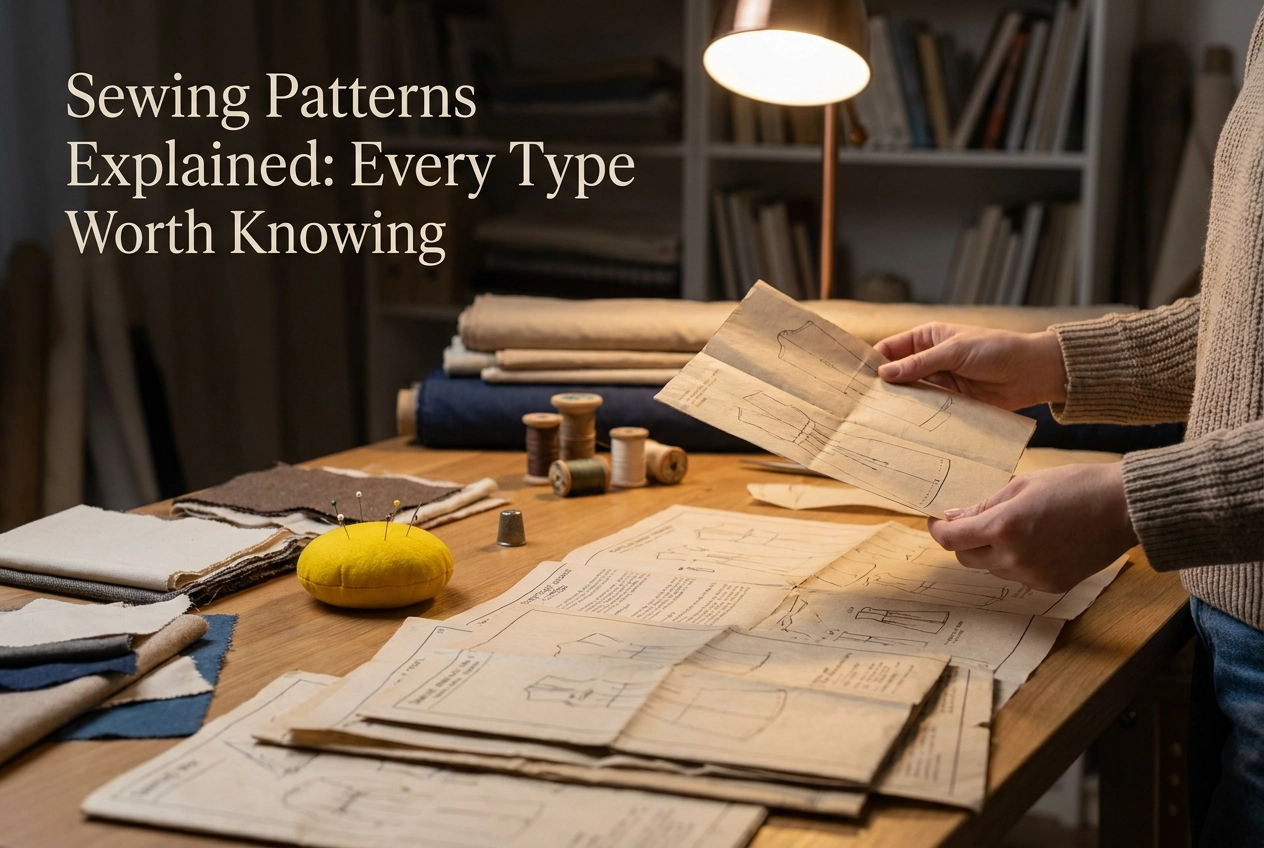
So you've decided to start sewing. Maybe you've got a shiny new machine sitting on your desk, or perhaps you've been hand-stitching for a while and you're ready to level up. Either way, you've probably heard the term "sewing patterns" thrown around and wondered where to even begin. Trust me, you're not alone.
Here's the thing: sewing patterns are basically your roadmap to creating almost anything you can imagine. Shirts, dresses, bags, stuffed animals, you name it. But with so many different types out there, it can feel a little overwhelming trying to figure out which ones are right for you and your projects.
That's exactly why we put this guide together. We're breaking down every major type of sewing pattern you'll come across as a beginner, explaining what makes each one unique, and helping you figure out which ones deserve a spot in your crafting toolkit. By the time you finish reading, you'll feel way more confident walking into a fabric store or browsing patterns online. Let's get into it!
Sewing Patterns vs. Machine Embroidery Designs: What Is the Difference?
If you've ever searched for "sewing patterns" online and found yourself staring at a mix of paper garment templates and digital embroidery files, you're not alone. The term "sewing patterns" is actually an umbrella phrase that covers two very different things: traditional garment construction patterns (think tissue paper inserts, printable PDFs, and multi-size cut-out templates that guide you in sewing clothing or quilts) and machine embroidery design files (digital stitch files in formats like DST, PES, and JEF that your embroidery machine reads directly). Both technically fall under the "sewing patterns" label, which is why the confusion is so common, especially for beginners just getting started.
For embroidery machine owners, those digital design files are your sewing patterns. They work the same way a paper pattern works for a garment sewist, just completely automated. Each file contains the full instructions your machine needs: exactly where to stitch, which stitch types to use, how many thread colors the design requires, and the precise sequence to follow from start to finish. You can learn more about how machine embroidery file formats work and what each format contains before you make your first purchase.
One of the biggest advantages of digital embroidery files over traditional printed patterns is speed. Paper patterns ship in the mail and can take days or even a week to arrive. A downloadable embroidery file is ready the moment your payment clears, so you can literally go from browsing to stitching in minutes.
The market behind these products is thriving too. The global needlecraft patterns market is valued at $4.8 billion in 2025 and is growing at a 5.9% CAGR through 2034. Within that market, embroidery patterns hold the single largest product-type share at 28.4%, which tells you this is very much a mainstream craft category with enormous variety. Understanding embroidery file formats like DST, PES, and more is the natural first step before diving into that wide world of design options.
Why Machine Embroidery Patterns Are Having a Major Moment
If you've been noticing more embroidery content popping up on your social feeds lately, there's a very real reason for that. The global needlecraft patterns market is currently valued at $4.8 billion and is projected to climb to $8.1 billion by 2034, growing at a steady 5.9% annually according to recent needlecraft market research. That's not a niche hobby quietly humming along in the background. That's a category on a serious growth trajectory, and machine embroidery patterns are sitting right at the center of it.
Here's what's actually driving all that momentum:
The DIY wave is real and it's massive. Individual hobbyists represent a whopping 71.3% of all needlecraft consumption globally, which means the market is almost entirely fueled by people stitching for the love of it. Home crafters picking up machines, personalizing gifts, decorating team gear, and adding custom touches to everyday items are the engine behind this entire industry. Social media and online tutorials have brought in a whole new wave of makers who would never have considered embroidery five years ago.
Wellness culture is sending new stitchers to their machines. People aren't just picking up embroidery because it's trendy. They're picking it up because it genuinely helps them decompress. The repetitive, focused nature of embroidery has earned it a reputation as a therapeutic activity, and that wellness angle is bringing in a broader audience than the traditional craft hobbyist. Stress relief and creative expression have become equally powerful purchase motivators.
Digital downloads have taken over how people buy patterns. Online stores now account for 44.7% of all needlecraft pattern revenue, making instant-download files the dominant distribution channel in the entire category. Shoppers want to buy a design and stitch it out the same afternoon, and the growth of the embroidery machine market through 2033 means the base of home machine owners actively hunting for new design files keeps getting larger every year.
North America is leading the charge. The US and Canada together account for 34.2% of worldwide needlecraft market revenue, and it's not hard to see why. American crafters have a uniquely strong appetite for themed designs tied to sports teams, college pride, seasonal holidays, and pop culture. That recurring, event-driven demand creates consistent repeat purchasing throughout the year, not just a one-time buy.
Sports and University Embroidery Patterns
If you own an embroidery machine and love sports, you've landed in one of the most exciting corners of the craft world. Sports and school-spirit themed embroidery patterns are consistently among the highest-demand categories in the US market, and it's easy to see why. NFL seasons, college football bowl games, March Madness, and local team pride keep demand strong every single month of the year. There's always a game coming up, a jersey to personalize, or a gift to stitch.
The project possibilities here are genuinely endless. Think stadium-themed hoodies for tailgate season, custom caps stitched with your team's colors, fan tote bags for game day, and spirit wear sized down for kids. These are the kinds of projects that people actually wear and use, which makes them incredibly satisfying to create and very easy to give as gifts.
University and college logo-style designs deserve their own spotlight. Whether you're representing your alma mater, cheering on a family member heading off to school, or just repping a favorite program, these files let you put that school pride on virtually any fabric. Back-to-school season and bowl game weekends are peak gifting moments for exactly this type of project, and college team logo embroidery ideas are actively trending on Pinterest right now, confirming just how much organic enthusiasm exists around this niche.
Embroiderynsewing.com carries a deep, well-organized selection of sports and university-style embroidery files that covers everything from professional football themes to collegiate spirit designs, making it a reliable starting point any time fandom inspiration strikes.
Anime, Cartoon, and Entertainment Embroidery Patterns
If sports fandom has a strong hold on the embroidery world, anime and cartoon fandom might just be giving it a run for its money. This is one of the fastest-growing niches in machine embroidery right now, powered by passionate communities who don't just watch their favorite shows — they wear them, decorate with them, and gift them to every fellow fan they know. The anime merchandising market projects continued growth through 2033, with apparel and accessories leading all product categories. That's a direct tailwind for embroidery pattern sellers.
The project possibilities here are genuinely exciting for beginners. Embroidered patches are probably the most popular starting point, since they're low-cost, fast to stitch, and easy to iron onto jackets, backpacks, and tote bags. Beyond patches, crafters in this niche love making cosplay accessories, custom pillow covers, personalized gifts, and decorated hats. If you know someone who's obsessed with a particular character, a custom embroidered item lands differently than anything you could buy off a shelf.
What makes this category especially versatile is the range of styles it covers. Classic cartoons appeal to one generation, while contemporary anime series like Demon Slayer, Jujutsu Kaisen, or Dragon Ball Z pull in another crowd entirely. Studio Ghibli designs consistently attract fans across all age groups. That cross-generational reach means you're never limited to a single audience.
For small sellers building an Etsy-style shop, entertainment-themed embroidery patterns are particularly strong performers. Fandom shoppers search with real specificity, typing in character names and franchise titles rather than broad terms. A catalog with deep coverage across multiple franchises captures far more of that search traffic than one with just a handful of designs.
Children's Embroidery Patterns for Gifts and Apparel
Children's embroidery patterns are one of those categories that never really go out of style. Parents, grandparents, baby shower guests, and small sellers are always on the lookout for something cute, personal, and handmade-feeling. The range of projects here is genuinely impressive: nursery wall hoops, personalized onesies, embroidered bibs, backpack patches, school bags with name tags, and custom birthday gifts are just a few of the items that keep this category moving year-round.
The motifs in children's designs tend to be bright, cheerful, and instantly recognizable. Animals are perennial favorites, from woodland creatures like foxes and hedgehogs to farm animals and jungle themes. Alphabet characters, fairy tale scenes, unicorns, dinosaurs, and popular kids' entertainment characters all perform consistently well. Because the designs are typically bold with clean stitch lines, they also happen to be genuinely beginner-friendly to stitch out, making them a great starting point if you just unboxed your first embroidery machine.
The personalization angle is especially worth paying attention to. Monogrammed towels, name-tagged backpacks, and custom embroidered bibs are among the best-selling embroidered items on Etsy in 2026, confirming what most crafters already know intuitively: people will pay a premium for something that has their child's name on it.
Timing your browsing and purchasing around seasonal demand windows is also a smart move. Back-to-school season, the holiday gifting rush, and baby shower season all produce noticeable spikes in children's pattern searches. Stocking up on designs before those windows means you're ready to stitch on demand rather than scrambling to find files at the last minute.
Seasonal and Holiday Embroidery Patterns
Seasonal embroidery designs are one of the most reliably popular categories you'll find, and for good reason. Demand spikes are completely predictable: Christmas and Halloween lead the pack, followed closely by Thanksgiving, Valentine's Day, Easter, and the Fourth of July. Customers start searching for holiday designs earlier than you might expect, which means the buying window opens well before the actual holiday arrives. For small sellers especially, that predictable cycle creates a repeatable revenue opportunity every single year.
The range of projects you can stitch with seasonal patterns is surprisingly broad. Think holiday table runners, festive kitchen towels, seasonal throw pillow covers, embroidered ornaments, and personalized gift bags. A single downloadable design file can often be used across multiple blank types, so one well-chosen Christmas wreath pattern could work on a tote bag, a stocking, and a kitchen towel all in the same project run. That kind of versatility makes each pattern purchase go much further.
If you're planning to sell finished pieces or take holiday orders, timing is everything. Build in 4 to 6 weeks before peak demand to allow time for stitching, any finishing work, and shipping. Starting early is one of the most practical habits you can build as an embroidery seller.
Patriotic and country flag motifs deserve a special mention here because they follow their own seasonal rhythm. Demand climbs around the Fourth of July, Memorial Day, and major national sporting events, creating a natural crossover with the sports and fandom patterns covered earlier in this list.
The smartest long-term strategy is building a library of seasonal designs you can access year-round. When an unexpected holiday rush hits or a customer places a last-minute order, having ready-to-download seasonal embroidery files on hand means you can get your machine running the same day rather than scrambling to find the right design.
Nature, Floral, and Traditional Embroidery Patterns
Floral and nature-themed embroidery designs are genuinely the backbone of traditional embroidery, and that reputation is well-earned. Whether you're brand new to your embroidery machine or you've been stitching for years, there's always a botanical wreath, a delicate bird motif, or a geometric floral pattern calling your name. These designs have a timeless, cross-generational appeal that keeps them consistently popular no matter what other trends are cycling through the craft world.
The project possibilities here are almost endless. Nature and floral patterns translate beautifully onto embroidered clothing accents like collar details and sleeve cuffs, framed hoop art for the home, tote bags, quilt panels, and everyday home décor textiles like napkins and pillowcases. Because the motifs feel familiar and universally appealing, finished pieces also make excellent gifts across every occasion and season.
For new embroidery machine owners specifically, floral and nature designs are a genuinely smart starting point. The stitch structures tend to be approachable, the color choices are forgiving, and the subject matter is familiar enough that small imperfections don't stand out the way they might in a more detailed character or logo design. If you're looking to build confidence with your machine, a simple botanical or bird design is one of the best places to start, and sites like Etsy's hand embroidery nature pattern market show just how much demand exists for these aesthetics.
There's also a meaningful wellness angle driving renewed interest in this category right now. According to 2025 embroidery trend analysis, crafters are increasingly drawn to calming, nature-inspired themes as a form of creative stress relief. That mindfulness-oriented crafting motivation is now considered a primary structural driver of growth across the broader needlecraft market. Choosing a soft floral or a peaceful woodland scene isn't just an aesthetic decision anymore; for many stitchers, it's genuinely therapeutic.
Machine Embroidery Fonts and Monogram Patterns
Embroidery fonts and monogram files sit in their own special category within the broader world of machine embroidery patterns, and they deserve a dedicated spot on your radar. Unlike decorative design files, font files are sold as complete alphabet sets, meaning you can type out any name, word, or initial and your machine will stitch it out without you needing to digitize a single letter yourself. That alone makes them one of the most practical purchases you can make, whether you're a hobbyist personalizing gifts for family or a small seller filling custom orders every week.
The use cases for monogram and font files are genuinely endless. Personalized towels, monogrammed tote bags, custom apparel labels, wedding gifts, and name-tagged children's items are among the most popular projects, and all of them benefit hugely from clean, well-designed lettering. A personalized touch transforms an ordinary item into something people actually want to keep or give.
When you're browsing font collections, you'll find styles to suit every project. Script fonts are elegant and popular for wedding and gift items, block letters work great for kids' gear and sporty apparel, collegiate styles are perfect for school spirit projects, and decorative ornamental options add flair to seasonal and holiday pieces. Check out this machine embroidery monogram fonts guide for a helpful breakdown of styles and tips.
One of the smartest things you can do is pair a font file with a complementary design file. Stitch a floral border around a monogram initial for a wedding gift, or combine a sports team motif with a name for a personalized jersey bag. The combination turns two simple files into something that feels completely custom.
For boutique decorators and small Etsy sellers, a solid font library is a genuine business asset. It means you can fulfill custom name orders quickly, without commissioning new digitizing every single time.
Understanding Embroidery File Formats: DST, PES, JEF, and More
Before you download a single design file, there's one practical thing you need to understand: machine embroidery files are not one-size-fits-all. Unlike a JPG or PNG image that opens on any device, embroidery files contain complete machine instructions, including stitch length, thread color sequences, and movement commands. Your machine can only read the formats it was built to support, so checking compatibility before you buy is a genuinely important step.
Here's a quick breakdown of the formats you'll encounter most often:
PES is the native format for Brother and Baby Lock machines, two of the most popular home embroidery machine brands among US hobbyists. If you own either of these, PES files are your go-to, and most downloadable design shops carry them widely.
DST was originally developed by Tajima for commercial machines, but it's become the closest thing the embroidery world has to a universal format. Most modern home machines can read DST files, which makes it a reliable fallback. One thing to know: DST files don't store thread color data, so you'll assign colors manually on your machine.
JEF is Janome's native format, and if you're stitching on a Janome machine, this is what you want. Similarly, VP3 is the format used by Husqvarna Viking and Pfaff machines, both popular with more experienced home embroiderers.
Other formats like XXX (Singer), ART (Bernina), and HUS (older Viking models) are less common but worth knowing if your machine falls into one of those categories.
The practical takeaway is simple: before you purchase any downloadable design pack, check that it includes your machine's specific format, or look for multi-format bundles that cover several formats in one download. A good design library will offer exactly that, saving you the headache of conversion issues right before a project. You can dig deeper into format specifics through resources like this guide to machine embroidery file formats if you want the full technical picture.
How to Choose the Right Embroidery Pattern for Your Project
Picking the right embroidery pattern before you sit down at your machine saves a lot of frustration later. Here are five practical things to keep in mind as you shop.
1. Match the design to your hoop size first. Most home embroidery machines come with a 4x4 inch hoop as the standard starting point, with a 5x7 inch hoop as the next common size up. Before you fall in love with a design, check its listed dimensions and make sure they fit within what your machine can handle. Oversized designs either require you to re-hoop mid-project or purchase a larger hoop frame attachment, and that extra step can be tricky for newer machine owners. Always check the design size listed in the product details before downloading.
2. Think about your fabric before choosing stitch density. Dense stitch fills look gorgeous on sturdy fabrics like denim, canvas, or cotton twill because those materials hold their shape under heavy thread coverage. If you are working with stretchy knits, lightweight linen, or delicate fabrics, look for designs with lower stitch counts and more open fills to avoid puckering. The fabric drives the design choice, not the other way around.
3. Add a personal touch for gifts. A pre-made digital file can still feel completely custom when it includes a name, a favorite team logo, or a seasonal motif that connects to the recipient. Sports fans, new parents, and holiday gift recipients all respond to that personal element. Browsing a catalog that carries a wide range of sports, fonts, and seasonal files gives you the flexibility to combine elements into something that feels one-of-a-kind.
4. Start with lower stitch counts as a beginner. If you are new to your machine, look for designs labeled under 10,000 stitches. Smaller stitch counts mean shorter run times, fewer thread changes, and less chance of running into tension issues while you are still learning how your machine behaves. Community members in groups like Creative Whims on Facebook consistently advise new stitchers to start simple and scale up gradually, and that advice applies equally well to machine embroidery beginners.
5. Use category filters to shop smarter. Instead of scrolling through hundreds of files with no clear direction, start with a theme category that matches your project. A well-organized catalog with filters for sports, holiday, anime, fonts, children's designs, and more helps you get from browsing to buying in a fraction of the time, so you can get to the fun part faster.
Start Stitching: Your Next Pattern Is Ready to Download
You've covered a lot of ground in this guide, and here's the short version: there are incredible embroidery patterns waiting for you across every category that matters. Sports and university designs, anime and entertainment themes, children's motifs, seasonal and holiday collections, nature and florals, and fonts and monograms are all fully stocked and ready to browse at embroiderynsewing.com.
Every file is a digital download, which means no waiting for shipping, no printing, and no cutting. Your design arrives machine-ready in all major formats, so you can load it and start stitching the same day.
The fastest way to find what you need is to browse by category rather than searching broadly. Head straight to the section that matches your current project, whether that's the sports catalog, a holiday collection, or an anime theme you love.
Every great stitch-out starts with finding the right pattern, and yours is already there waiting for you.
Conclusion
Sewing patterns do not have to feel intimidating once you understand what each type brings to the table. Whether you choose printed, digital, or vintage patterns, each format has its own strengths depending on your project and skill level. Beginner-friendly patterns with clear instructions will build your confidence, while more advanced options will push your skills further over time. The right pattern truly makes the difference between a frustrating experience and one you genuinely enjoy.
Now it is time to put this knowledge to work. Start by picking one pattern type that resonates with you and commit to a small, manageable project. Browse a few trusted pattern brands, gather your materials, and take that first stitch. Every expert sewist started exactly where you are right now. Your next favorite creation is just one pattern away.