

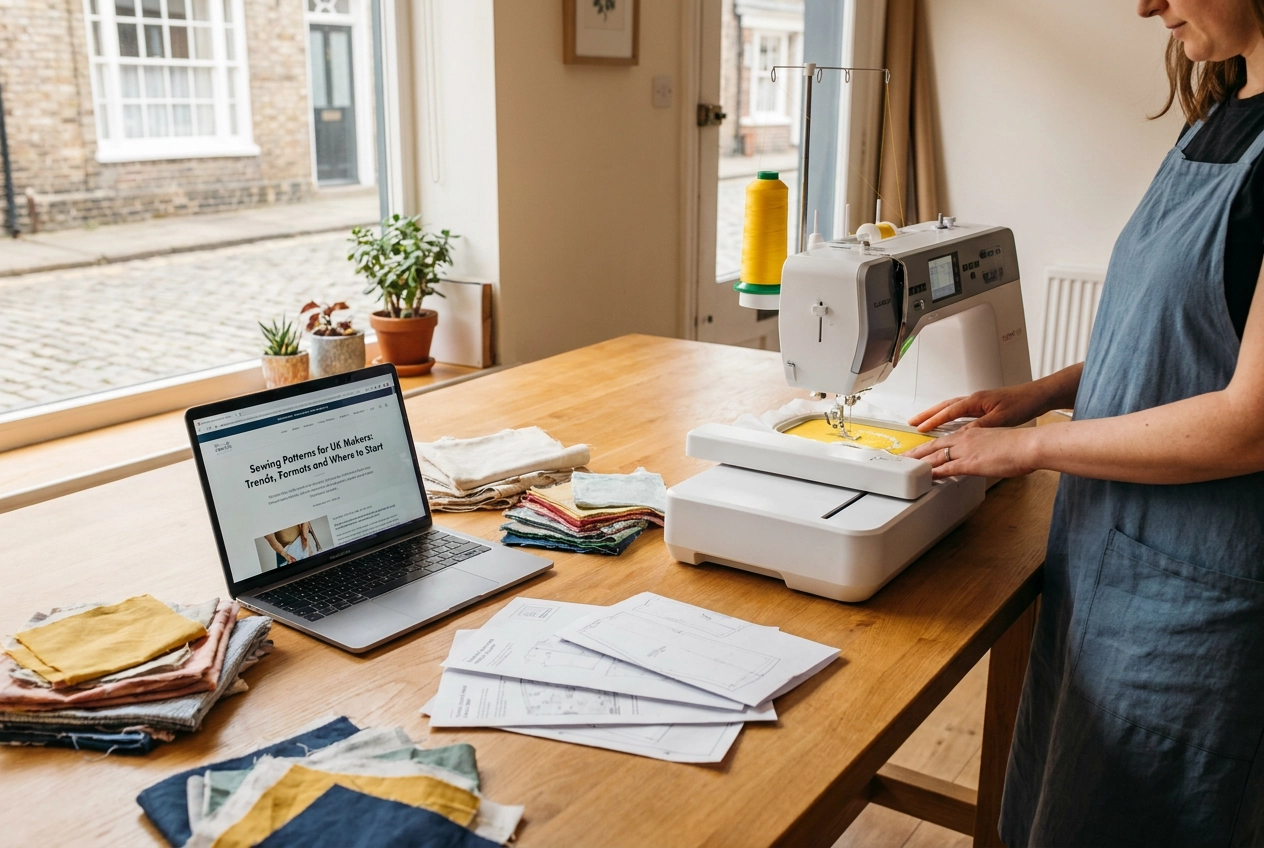
So you've caught the sewing bug. Maybe you've been watching endless YouTube tutorials, filling your basket with beautiful fabric, or quietly bookmarking projects you swear you'll get to "someday." Sound familiar? Well, someday is today.
Finding the right sewing patterns in the UK can feel a little overwhelming when you're just starting out. There are so many styles, formats, and brands to choose from, and it's not always obvious where to begin. Should you go digital or stick with paper? Which brands are beginner-friendly? And what on earth is everyone talking about when they mention "indie patterns"?
Don't worry, we've got you covered. This guide is packed with everything a new maker needs to know about sewing patterns UK sewists actually love. From the biggest trends doing the rounds right now to the most beginner-friendly places to shop, we're breaking it all down into a simple, easy-to-follow list. By the end, you'll feel confident, inspired, and ready to pick up your first pattern without second-guessing yourself. Let's get into it.
Spring 2026 Trend Categories Worth Stitching Right Now
If you're planning your spring makes right now, the 2026 runway season has given embroidery enthusiasts a genuinely exciting set of directions to work with. Here are the five trend categories that are generating the most buzz among UK makers this season.
1. Animal Prints and Insect Motifs
Butterfly wings, moth details, and woodland creature prints were everywhere at London and New York Fashion Weeks this spring. According to Dream Cut Sew's Spring 2026 trend roundup, insect prints ranked among the standout directions for the season, with fawn prints and detailed butterfly motifs appearing across multiple collections. For embroidery specifically, this translates beautifully. A delicate moth or butterfly file stitched onto a tote bag or denim jacket sleeve gives you that runway-relevant look without needing any sewing pattern experience at all.
2. Bold Brights: Yellow, Green, and Orange
Vibrant colour is having a serious moment. Yellows, greens, and oranges dominated the SS26 palette at both major fashion weeks, and these shades work particularly well as embroidery accents on neutral base fabrics. Think a bold sunflower yellow floral on a white tee, or a punchy orange nature motif on a lightweight jacket. These are beginner-friendly projects with a high-impact finish.
3. Pantone's Cloud Dancer
The official Pantone Colour of the Year 2026 is Cloud Dancer, a soft off-white that acts as the perfect backdrop for intricate embroidery. Floral fills, nature motifs, and delicate line designs all pop beautifully against this tone. If you're new to embroidery, starting with a light neutral fabric and a simple floral or botanical file is a great confidence-building combination.
4. Tactile and Textured Aesthetics
Flat, simple fills are giving way to layered, textured stitch work this season. As noted in Spring/Summer 2026 print trend analysis, boucle-inspired textures and asymmetrical design placements are defining the tactile direction of 2026 fashion. Look for embroidery files that include varied stitch angles, density changes, and layered fill sections rather than single-layer designs.
5. UK Makers Are Actively Trend-Chasing
Dream Cut Sew publishes seasonal trend roundups twice yearly, and the consistent readership proves that UK hobbyists are genuinely engaged with translating runway directions into their own projects. That means now is exactly the right time to stock up on seasonal embroidery files that reflect these categories before your spring projects are underway.
A Seasonal Project Calendar for UK Embroidery Buyers
Thinking about your embroidery projects in terms of seasons is honestly one of the best habits you can build as a UK maker. It keeps your pattern library fresh, your projects purposeful, and your gifting game strong all year round. Here are the three key windows to plan around.
Spring: March to May
Spring is the highest-energy planning window for UK embroidery enthusiasts, and it shows in the renewed buzz across craft communities every year. After a long winter, makers come back to their hoops and machines with real momentum, ready to start fresh garment and accessories projects. This is the ideal time to stock up on nature-themed designs, floral motifs, butterfly and insect patterns, and anything that leans into the bold brights and soft pastels that dominate spring runways. For 2026 specifically, butterfly wings, animal prints, and vibrant yellows and greens are strong trend directions worth stitching into tote bags, blouses, and light layering pieces.
Back to School: August to September
The August to September window is surprisingly busy for UK makers, driven almost entirely by personalisation demand. Parents want names on book bags, school colours stitched onto PE kit, and children's favourite characters decorating uniform accessories. This is a practical, deadline-driven season, and having your children's character files and alphabet embroidery fonts already downloaded means you can start stitching the moment school supply lists land. Building a small library of go-to kids' motifs before August hits is a genuinely smart move.
Christmas Gifting: October to December
This is the biggest commercial window by far. UK crafters produce personalised gifts at volume during these months, including embroidered towels, stockings, tote bags, and decorated jumpers. Because instant-download files have zero lead time, you can purchase a new design on a Sunday afternoon and have a finished, gift-ready project completed before the following weekend. There is no waiting for physical pattern packs to arrive in the post. Planning your Christmas library in October, rather than scrambling in December, means you go into the gifting season with designs already loaded and ready to stitch.
Sports and Fandom Personalisation: A Huge Opportunity for UK Makers
Sports personalisation is one of the most reliable demand drivers in UK embroidery, and it is easy to understand why. Hobbyists regularly stitch team colours, squad numbers, and sport-specific motifs onto scarves, polo shirts, caps, and kit bags, either for their own use or as thoughtful personalised gifts. A custom embroidered scarf or a personalised kit bag with a favourite number on it carries far more meaning than anything you could buy ready-made, and that emotional pull keeps demand for sports-themed sewing patterns consistently strong throughout the year.
Football sits right at the heart of this. The Premier League has a passionate, year-round supporter culture, and fans across the country actively personalise garments and accessories to show their allegiance. Pinterest maintains a dedicated ideas category for embroidery design for sports fans, which reflects genuine, ongoing search interest rather than a passing trend. With the FIFA World Cup 2026 now generating fresh pattern content explicitly aimed at UK and European buyers, timing could not be better to build out your sports embroidery collection. Patterns featuring football motifs, such as a soccer ball surrounded by floral accents in a hoop design, work brilliantly as both personal makes and gifts for football-loving friends and family.
Rugby and cricket add strong seasonal layers on top of football. The Six Nations runs February to March each year, cricket heats up through summer, and international tournaments create additional bursts of gifting activity at predictable points in the calendar. These windows are worth planning for in advance.
Beyond sport, fandom embroidery is another genuinely exciting growth area, especially among younger UK hobbyists. Anime characters, cartoon figures, and entertainment properties are in constant demand for personalising tote bags, denim jackets, and accessories. The British sports customisation category on Etsy UK already demonstrates that buyers are actively searching for and purchasing personalised sports makes, confirming this is a commercially real niche. Embroiderynsewing.com's catalogue covers sports-themed machine embroidery files across NFL, college athletics, and sport-specific motif collections, giving UK makers a ready-made library to browse for inspiration and adapt to their own colour schemes and gifting projects.
How UK Makers Actually Use Downloadable Embroidery Designs
UK makers use downloadable embroidery designs in some really practical and creative ways, and understanding how others approach their projects can help you get more out of every file you purchase.
Personalised gifts are genuinely the biggest motivator for most hobbyists buying downloadable designs. Think embroidered initial towels for wedding gifts, monogrammed tote bags for birthdays, custom baby clothing for new arrivals, and decorated kitchen textiles for Christmas. The ability to buy a design file instantly, stitch it onto something meaningful, and wrap it up as a one-of-a-kind present is exactly what makes downloadable patterns so popular. There is no waiting for post, and one purchased file can be stitched repeatedly onto different items, which makes the cost per project genuinely low.
Small sellers and boutique decorators also lean heavily on downloadable design libraries. If you sell personalised items on craft marketplaces or at local markets, having access to a broad, affordable catalog means you can say yes to more customer requests without commissioning expensive custom work each time. Digital files are downloaded instantly and reusable, so your cost per item stays manageable even on small runs.
Children's themed embroidery is consistently popular among UK buyers. Animal motifs, cartoon characters, and nature-inspired designs appear on baby grows, nursery cushions, and school bag details all year round. Parents and grandparents particularly love personalising items for little ones using cheerful, recognisable imagery.
Home décor projects are growing steadily too. Cushion covers, framed hoop art, tote bags, and tea towels are all projects where a well-chosen embroidery design transforms something ordinary into something personal and handmade.
Finally, country flags, transport motifs, and seasonal designs serve a really specific gifting need, covering travellers, children with transport obsessions, and recipients with niche hobby interests. The embroiderynsewing.com catalog spans all of these categories, making it a practical one-stop destination for UK makers working across multiple project types.
Embroidery File Formats: What UK Buyers Need to Know
Before you spend a single penny on downloadable embroidery designs, there is one check you absolutely must do first: confirm that the file formats included in the download actually work with your machine. This is not optional, and it is especially important with digital purchases where refunds are rarely available. Embroidery files are not like regular image files. They contain stitch-by-stitch instructions, needle movement data, colour change commands, and trim signals that only specific machines can read. A PNG or SVG cannot simply be loaded onto your machine and stitched out. You need the proper proprietary format, and different brands use completely different ones.
Here is a quick breakdown of the formats that matter most for UK home embroidery machine owners:
.PES is the format for Brother machines, which are among the most widely owned home embroidery machines in the UK. Baby Lock machines, which share Brother's technology, also use .PES.
.JEF is the format for Janome machines, another very popular UK brand with a loyal hobbyist following.
.VP3 covers both Pfaff and Husqvarna Viking machines, two brands that appeal to more advanced UK makers.
.DST was originally created by Tajima and has become something close to a universal embroidery format. Many commercial and semi-professional machines accept it, which makes it one of the most flexible options available.
Bernina machines are a slightly more complex case, and this matters because Bernina has a strong following among serious UK hobbyists who invest in higher-end equipment. Depending on your model generation, your Bernina may use the .ART format (which stores editable design data) or the .EXP stitch format. If you own a Bernina, always check format availability specifically before buying, because not every design catalog covers both variations. You can find a detailed overview of how these formats differ at this helpful embroidery machine file formats guide.
The good news is that many quality design sellers, including the catalog at embroiderynsewing.com, package multiple formats together in a single ZIP file download. One purchase can cover Brother, Janome, Singer, Pfaff, and other common UK household brands at the same time. Just remember to unzip the archive before transferring files to your machine, as this is a step that catches out a lot of newer buyers.
If you are unsure which format your machine needs, check your machine's manual first. If you no longer have it, the manufacturer's website will list the supported formats, and the product description for your machine (on the retailer page where it was sold) will often specify it too, particularly in the USB or memory card section. For a deeper look at how formats like DST, PES, and others compare, it is worth a few minutes of reading before your first purchase. Getting this right upfront means every design you buy is ready to stitch the moment it lands in your downloads folder.
Pricing and Instant Downloads: What to Expect as a UK Buyer
One of the most genuinely pleasant surprises for UK buyers exploring downloadable embroidery designs is just how affordable the whole thing is. Most individual design files are priced in the impulse-purchase range, typically the equivalent of a few pounds per file, which means you can steadily build a substantial, project-ready library without making any significant financial commitment upfront. That low cost per file also removes a lot of the pressure that comes with trying something new. If you want to test a spring floral motif or a children's character design before committing to a full project, buying a single file to try first is a perfectly sensible approach.
The instant download model is genuinely well suited to UK buyers, especially when purchasing from international digital retailers. Because you are buying a digital file rather than a physical product, there is no shipping wait, no international postage fee, and no customs complications to navigate. Post-Brexit, those logistics can be a real friction point when ordering physical goods from overseas, but digital downloads sidestep all of that entirely. You pay, you download, you stitch.
It is worth knowing that UK HMRC rules mean VAT can apply to digital goods purchased from international retailers. Reputable platforms handle this transparently at checkout, so you should see any applicable tax reflected in your total before you confirm payment rather than encountering surprise charges afterwards. If a checkout feels unclear on this, that is worth pausing on.
On embroiderynsewing.com, regular sales and best-seller visibility make it easy to spot popular designs at reduced prices. Building a wishlist as you browse means you can return to favourites during promotional periods, which is a genuinely practical habit for project planning across the year.
Why DIY Embroidery Fits Perfectly Into Sustainable UK Fashion
The UK apparel market is on a steady upward trajectory, growing from an estimated USD 5.40 billion in 2026 toward USD 6.87 billion by 2034 at a CAGR of 3.05%. What makes that growth story genuinely interesting for embroidery makers is what is driving it. Personalisation and sustainable fashion are among the strongest forces shaping how UK consumers spend on clothing, and machine embroidery sits right at the intersection of both.
Think about what embroidery actually does for a garment. It refreshes something plain into something personal. It takes a secondhand jacket from a charity shop and turns it into a one-of-a-kind piece that nobody else owns. That process directly reduces the pull toward fast-fashion purchases, because once you can transform what you already have, buying new feels far less necessary. DIY upcycled fashion has been identified as a rising category specifically in 2026, moving from a niche hobby into a commercially recognised trend, and the global upcycled fashion market is forecast to reach USD 22.29 billion by 2035. UK makers are clearly part of a much bigger movement.
Nature motifs, florals, butterflies, and seasonal designs are particularly popular choices for upcycling projects, because they complement almost any garment and translate beautifully onto fabric. A plain linen shirt becomes a statement piece. A secondhand tote bag becomes a personalised gift.
Speaking of gifts, embroidered items carry a perceived value that mass-produced alternatives simply cannot match. A handmade embroidered gift feels intentional and specific to the recipient, which means it is far less likely to end up in a donation bag after Christmas. That aligns perfectly with the broader UK shift toward more meaningful, thoughtful gifting.
For anyone selling personalised embroidered pieces, that value perception is also a direct competitive advantage. UK consumers are increasingly willing to pay a premium for products that feel made specifically for them, making embroidery skills a genuinely useful differentiator in a crowded market.
How to Build a Downloadable Pattern Library That Covers Every Project
Building a useful pattern library is less about collecting as many files as possible and more about collecting the right files in the right order. Start by writing down your three most common project types before you spend anything. If you regularly make personalised baby gifts, stitch children's clothing, and kit out sports fans, those three categories should anchor your first purchases completely. Buying designs that match your actual workflow means every file earns its cost quickly rather than sitting unused in a folder.
Once you start downloading, organisation becomes your best friend. Set up clearly labelled folders from day one, sorted by file format first and then by project category. Libraries grow faster than you expect, and hunting through hundreds of unsorted files when a Christmas order deadline is approaching is genuinely stressful. A little structure at the start saves a lot of time later.
Fonts and monogram sets deserve a special mention as early purchases. A single embroidery font file can power personalisation across hundreds of completely different projects, from names on sports bags to initials on baby blankets. For UK buyers building from scratch, a good font set offers one of the best returns on investment in the entire catalog.
Seasonal planning is where a lot of makers lose momentum. Spring 2026 animal prints, back-to-school themes, and Christmas motifs all have a production lead time attached to them. Browsing the embroiderynsewing.com catalog monthly and matching purchases to a simple project calendar keeps you ahead of each season rather than scrambling to catch up.
Finally, sourcing designs from a single broad catalog genuinely saves time. Jumping between multiple shops for anime files, sports motifs, nature designs, and children's themes creates login overhead and inconsistent formats. The UK sewing boom confirmed by Liberty London's 2026 expansion signals that more makers are building serious creative practices right now, and a consolidated, searchable library is what serious makers actually need.
Start Stitching: Your Next Steps as a UK Maker
Everything you have read in this guide points toward one simple action: get your first file downloaded and loaded onto your machine. Before you buy anything, double-check your machine's format requirements so your purchase works first time. Brother machines typically use .PES, Janome uses .JEF, and multi-brand projects often rely on .DST, so a quick check of your manual saves frustration later.
From there, let the Spring 2026 trends guide your first few purchases. Animal prints, insect motifs, bold brights, and the soft Cloud Dancer palette give you a ready-made starting point for building a library that feels current and sellable right now.
Think seasonally as you build that library, planning around spring makes, back-to-school personalisation, and Christmas gifting so every purchase has a clear purpose.
Browse embroiderynsewing.com across sports, children's themes, nature motifs, fonts, and seasonal designs to find files that match your machine and your next project. Bookmark two or three favourite categories, check for active discounts, and download your first design today so it is ready to stitch this weekend.
Conclusion
Starting your sewing journey does not have to be complicated. The UK maker community is thriving, and the right pattern is out there waiting for you. Here are the key things to take away from this guide:
Digital and paper patterns both have their place; choose the format that suits your workflow
Indie designers offer fresh, modern styles with beginner-friendly instructions
Trending silhouettes and styles give you plenty of exciting projects to work toward
Starting simple builds the confidence to tackle more ambitious makes over time
Now it is time to stop bookmarking and start cutting. Browse one of the recommended shops, pick a pattern that genuinely excites you, and get that fabric on the table. Every skilled maker started exactly where you are right now. Your first finished project is closer than you think.