So you've decided to take your BMW obsession to the next level, and honestly, we respect that. Whether you're looking to customize a jacket, personalize a car seat cover, or create the ultimate fan gift, finding the right BMW embroidery design can make all the difference between something that looks sharp and something that looks like it came from a bargain bin.
But here's the thing: not all embroidery designs are created equal. Thread counts, file formats, digitizing quality, and licensing considerations are just a few of the factors that can turn an exciting project into a frustrating headache if you're not prepared.
The good news? You don't have to figure it all out the hard way. This guide walks you through everything an intermediate embroiderer needs to know before hitting that purchase button. From spotting high-quality files to understanding which designs actually hold up on different fabric types, we've got you covered with practical tips you can use right away. Let's get into it.
## What a BMW Embroidery Design Actually Includes
Before you add a BMW embroidery design to your cart, it helps to know exactly what you're buying, because "BMW embroidery design" is actually an umbrella term covering several distinct visual assets.
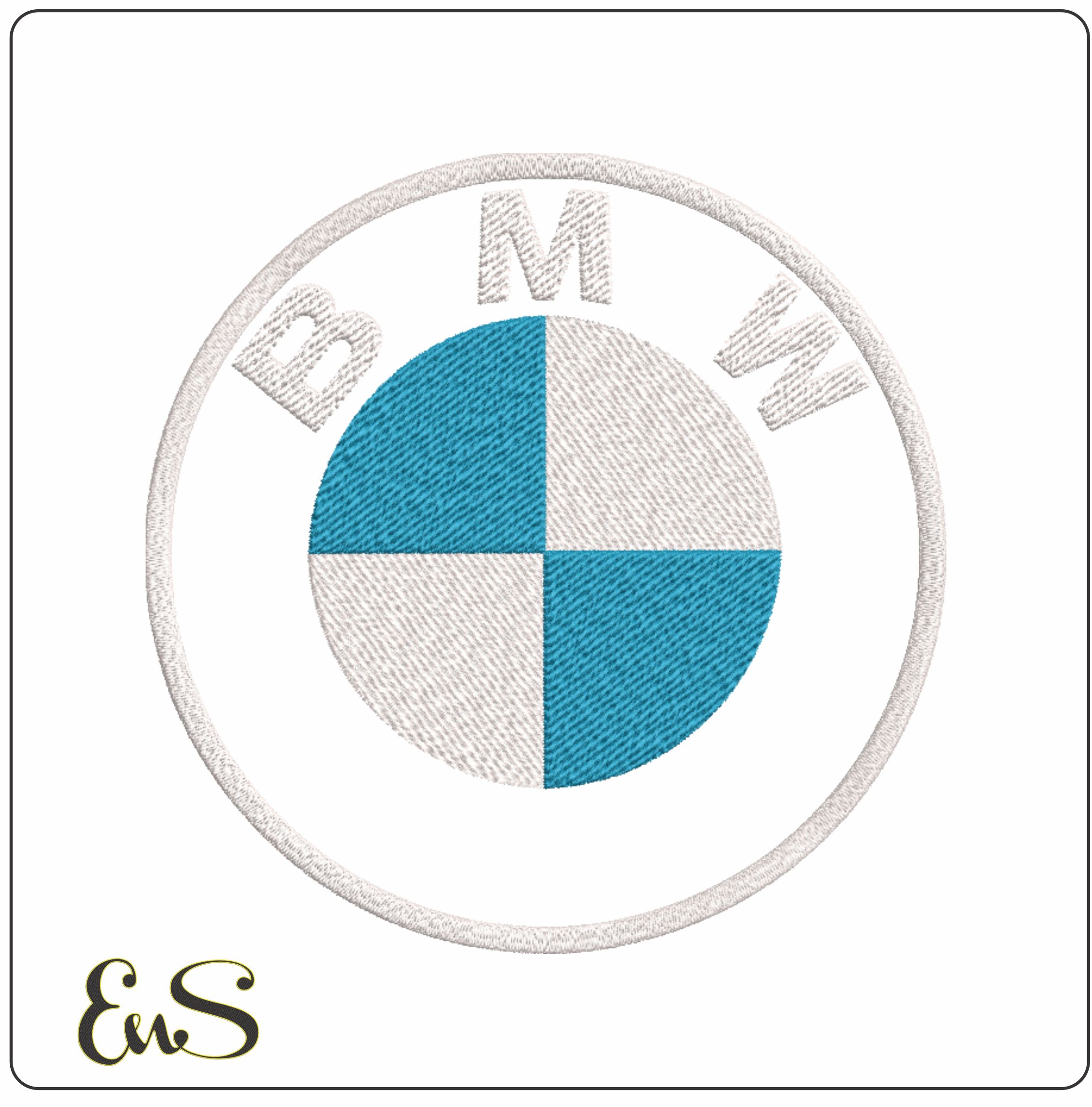
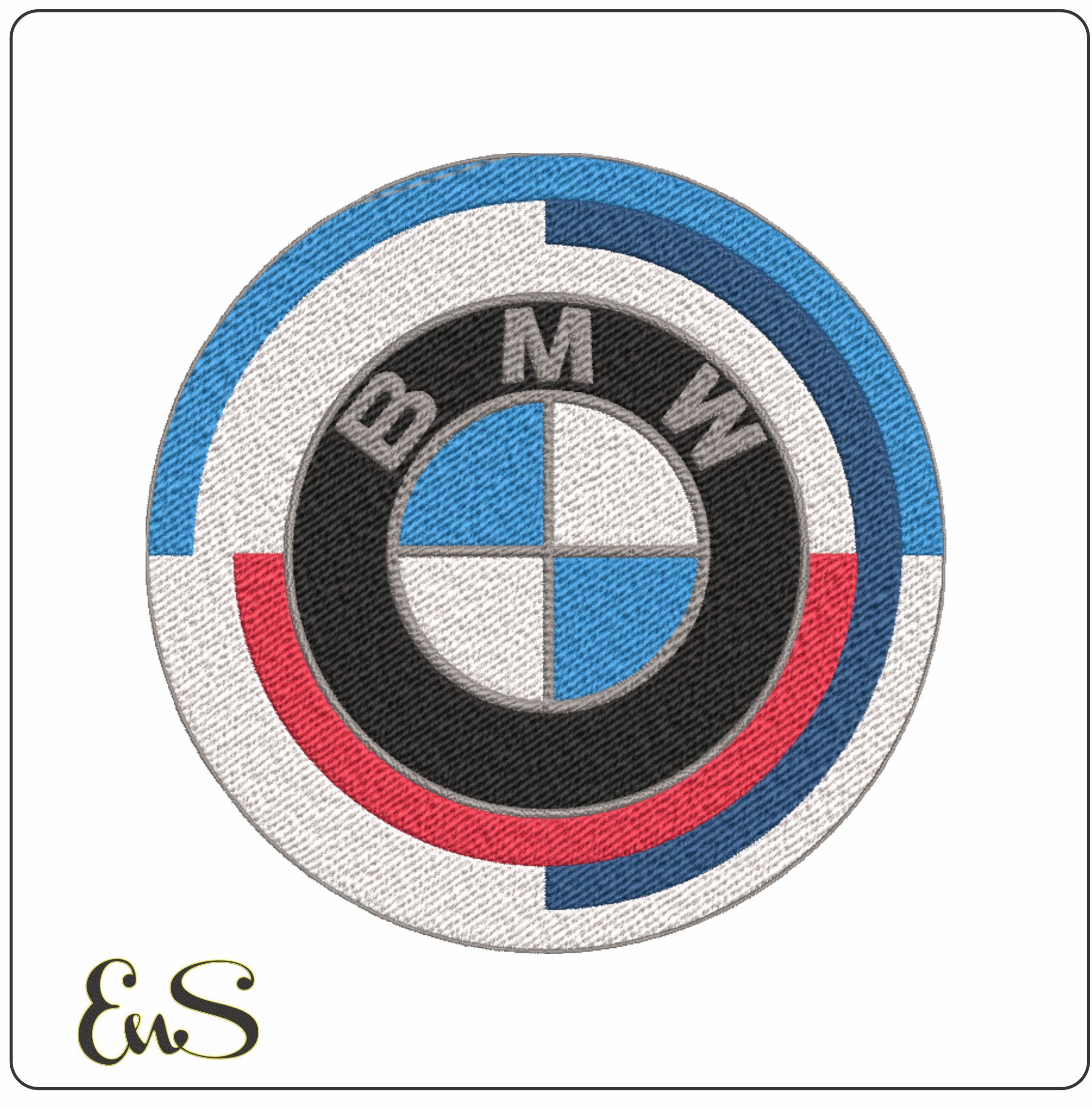
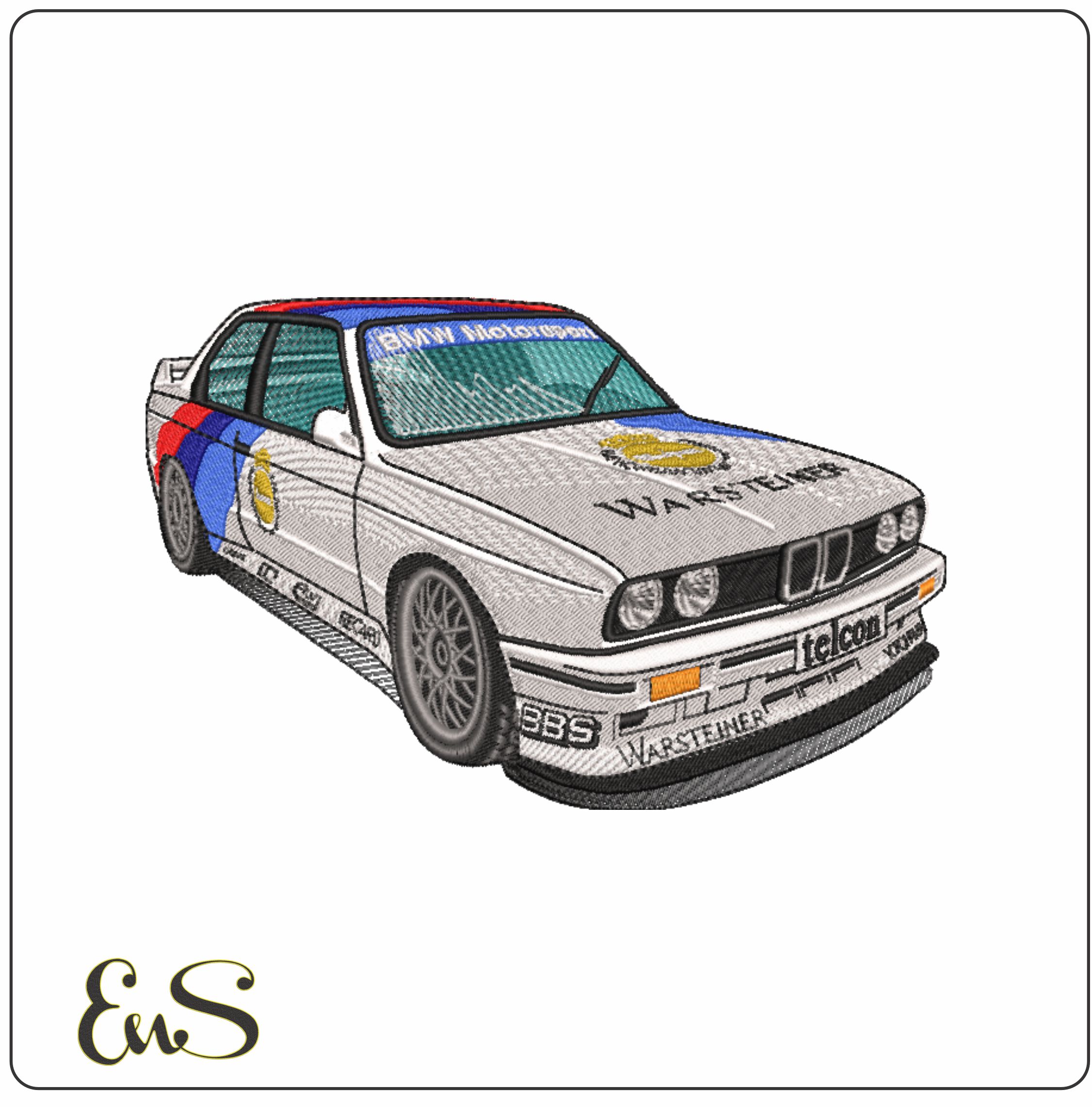
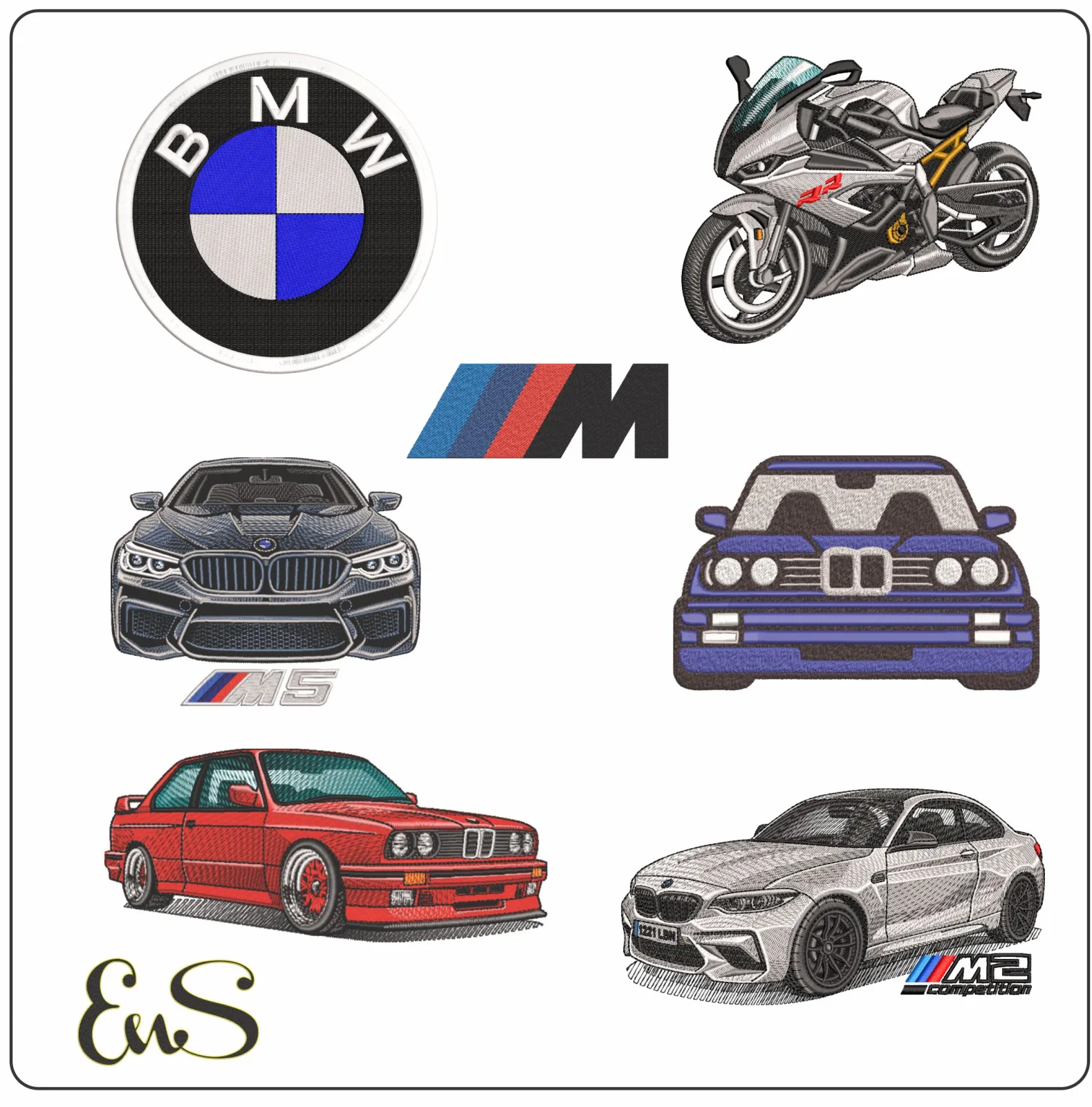
The most recognized is the BMW roundel, that iconic quartered circle split into alternating blue and white segments. Then there's the BMW wordmark, which is simply the typographic "BMW" lettering used as a standalone design element. Beyond those two, you'll find motorsport-variant designs like the tricolor ///M badge associated with the M-series performance lineup, or racing series marks tied to DTM and other motorsport contexts. Sellers list these as separate products because they are genuinely different files, so double-check the product preview image before purchasing to confirm you're getting the specific logo you want.
Here's something important for custom apparel makers to understand: the overwhelming majority of BMW embroidery design files sold through digital marketplaces are fan-use or brand-inspired designs, not officially licensed products authorized by BMW AG. For personal use on your own jacket, cap, or gear bag, that's generally a straightforward creative choice. If you're planning to embroider finished goods and sell them commercially, however, you're working with a protected trademark, and that warrants a closer look at your legal footing before you start taking orders.
A digitized embroidery file itself is not a standard image. It's a set of machine-readable stitch instructions encoding exactly where each thread goes, at what density, in what direction, and in what color sequence. A typical BMW roundel design contains around 6,575 stitches across four color changes, packed into roughly a 50 x 50 mm footprint.
Finding these files is easier than you might expect. Platforms like embroiderynsewing.com maintain a dedicated Brand category that groups automotive and recognized brand motifs together, putting BMW designs right alongside other high-demand logo-inspired files for quick, intuitive browsing.
How the BMW Roundel Translates Into Machine Embroidery
Now that you know what's included in a BMW embroidery design file, it's worth understanding the technical side of how that iconic roundel actually gets built in thread. The digitizing decisions behind a well-executed BMW roundel are what separate a sharp, professional result from a blurry, puckered disappointment.
Satin vs. Fill: Choosing the Right Stitch for Each Zone
The roundel's structure naturally divides into two types of areas, and each one calls for a different stitch approach. Satin stitches are the go-to choice for the crisp circular outer border and the thin white dividing lines between color quadrants. Satin stitches lay parallel threads side by side in a smooth, dense column, which is exactly what you need for narrow curves and sharp edges. The outer ring and those slim internal dividers are what give the roundel its crisp, engineered look, and satin stitches are the only way to preserve that precision in thread.
For the larger blue and white color blocks, digitizers switch to dense fill stitches (typically a tatami or run-fill pattern). Satin stitches on a wide area cause thread tension problems, visible gaps, and an uneven surface, so fill stitches take over wherever broad coverage is needed. Per The BMW Logo: A Complete Guide to Its History, Meaning, and Embroidery Design, this combination is the standard digitizing framework for the roundel.
Stitch Counts and What to Expect
Stitch count gives you a practical benchmark for quality and production time. A small left-chest patch version at approximately 3 inches typically runs 5,000 to 8,000 stitches, while a large back jacket version can easily exceed 20,000 stitches. Higher stitch counts mean longer machine run time and heavier thread coverage on the fabric, so knowing these numbers helps you pick the right size file for your project.
### Thread Colors and Color Sequencing
Getting the color right matters more than most people expect. BMW Blue corresponds to PMS 294 C, a deep, rich navy-leaning blue that maps closely to Madeira thread 1016 or Robison-Anton 2291. Choosing a brighter or lighter blue is one of the most common mistakes on this logo. White uses standard bright white thread, and black outlines are especially important on dark fabrics where the roundel's border needs to pop.
Beyond color matching, a well-digitized file sequences colors strategically. All blue regions stitch together before the machine moves to white, minimizing thread trims and color changes mid-run. The border stitches last, locking every color block cleanly in place and covering any edge irregularities from the interior fills. This kind of thoughtful sequencing is a reliable quality signal when you are evaluating any BMW roundel file before purchase.
## File Formats and Machine Compatibility: Which One Do You Need
Your embroidery machine speaks its own language, and if you hand it the wrong file format, it simply won't respond. Here's a quick reference for the formats you'll encounter most often when shopping for a BMW embroidery design:
- PES: Brother and Baby Lock home machines
- DST: Tajima and most commercial or semi-commercial machines
- JEF / JEF+: Janome machines (JEF+ covers newer models)
- EXP: Melco machines
- VP3: Husqvarna Viking and Pfaff current models
- HUS: Older Husqvarna machines (if your machine is more than a decade old, double-check this one)
- XXX: Singer and select Viking models
The HUS versus VP3 distinction trips up a lot of Husqvarna owners. Newer machines read VP3 natively, while older models need HUS. When in doubt, check your machine's manual or look at the file extensions of designs you already know work.
Before clicking purchase anywhere, scroll to the format list in the product description. At minimum, look for a pack that includes PES, DST, and JEF together. Those three cover the widest spread of home and semi-commercial machines in one shot.
One thing worth understanding is the difference between a native format file and a converted one. A native file is digitized specifically for your machine brand, with stitch sequences, underlay settings, and density calibrated for how that machine interprets commands. A converted file is often auto-translated from another format, which can introduce stitch angle shifts or dropped underlay instructions that quietly hurt output quality.
The practical fix is buying from a source that bundles multiple properly prepared formats in a single download. embroiderynsewing.com's BMW M Sport design includes 11 formats in one ZIP file, covering machines from Brother and Janome through Husqvarna Viking, Pfaff, Melco, and Tajima. That approach means you're covered if you upgrade machines later without repurchasing. For additional format options worth comparing, the BMW Logo design at embroiderytrend.com is another resource to explore as you build your format checklist.
Matching Hoop Size to Your BMW Embroidery Project
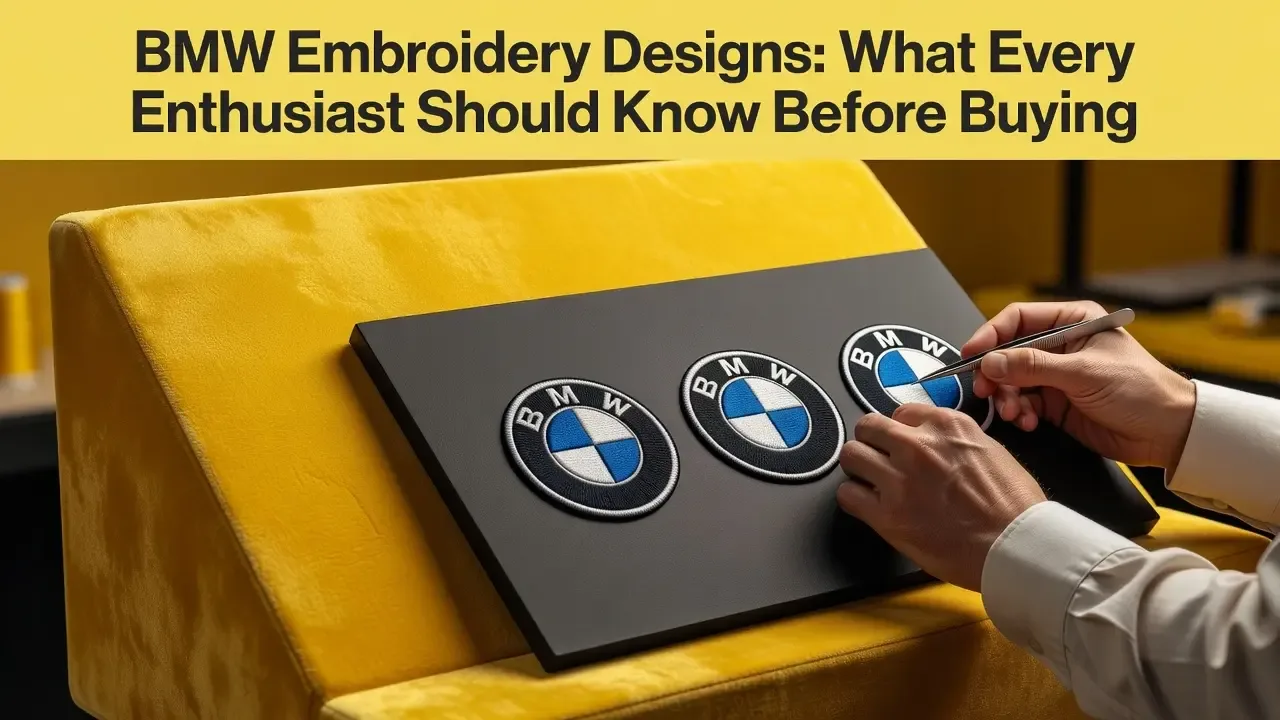
Getting hoop size right before you hit "purchase" can save you a frustrating afternoon of mismatched projects and wasted stabilizer. BMW embroidery designs span a practical range from 10x10 cm up to 30x18 cm, and each size bracket maps cleanly to specific applications.
The 10x10 cm hoop is your go-to for cap fronts and small patch applications. Most commercially available BMW roundel designs fall right in this range, with typical sizes running from about 50 mm up to 99 mm square. These compact files stitch out beautifully on beanies, baseball caps with flat fronts, and iron-on patches for gear bags. A 13x18 cm hoop opens up standard left-chest placements on polos, jackets, and mechanic shop uniforms, giving you enough real estate to add a wordmark beneath the roundel if your design includes one. When you're ready to go big on a varsity or bomber jacket back, you're looking at a 30x18 cm hoop to accommodate a full-width automotive graphic without crowding.
Cap embroidery deserves a specific callout here. A BMW roundel file digitized for a standard flat hoop will distort when sewn onto a structured hat front because the curved bill and rigid buckram interfere with how the design registers. Cap frames hold the hat at a specific angle and tension, and designs intended for them are digitized with that curve factored in. If you want a clean roundel on a structured cap, look for a cap-specific version of the file rather than trying to adapt a flat-hoop design.
On the topic of resizing, it is worth noting directly: do not scale designs up in your machine's software expecting the same results. Stitch counts climb steeply with size increases, and machine-level scaling simply distributes existing stitches across a larger area rather than re-digitizing them proportionally. The result is loose, gappy coverage that will not hold up to washing. Always confirm the dimensions listed in the product description match your machine's maximum hoop capacity before purchasing. This is your responsibility as the buyer, and most vendors do not offer refunds when a design does not fit your hoop setup.
For genuinely large BMW graphics, a split-design or appliqué approach is the smarter solution. A full-back jacket design attempted as a single densely digitized file can produce a stiff, boardlike result that actually damages lightweight jacket fabric. Appliqué versions, like the BMW embroidery design available at Embroidery n Sewing, use a fabric base layer to cover large areas with minimal stitch density, keeping the finished piece flexible and wearable.
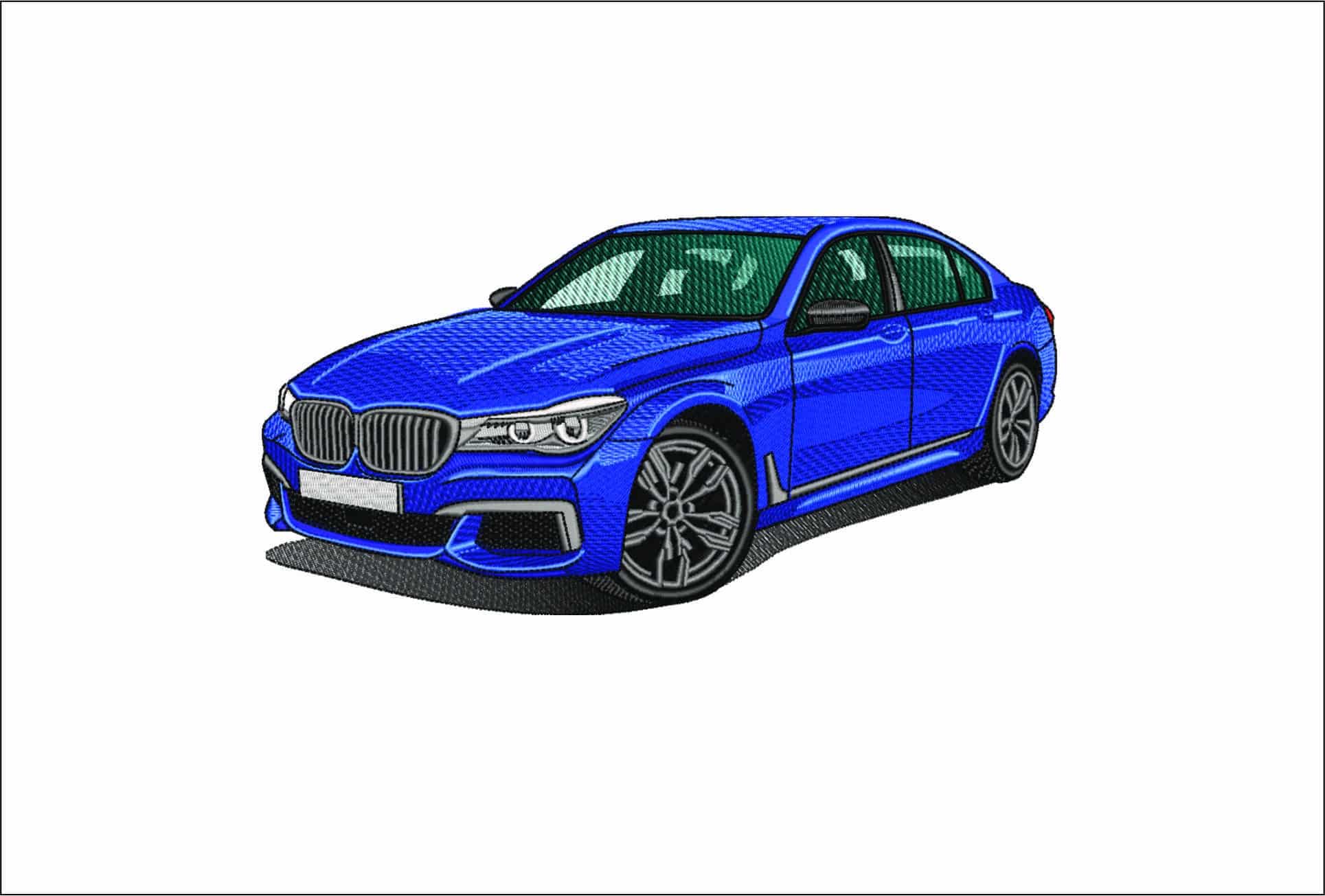
Once you have your file loaded and your hoop sorted, the real fun begins. BMW embroidery designs are surprisingly versatile, and the use cases stretch well beyond slapping a logo on a shirt. Here are seven creative ways to put that roundel to work.
1. Car Club Jackets and Hoodies
BMW owner groups and regional chapters regularly produce custom club apparel, and the jacket back or sleeve patch is the centrepiece. A large roundel paired with chapter text, a founding year, or a regional name turns a plain hoodie into a genuine membership piece. This is one of the best applications for larger hoop sizes, and the design scales cleanly when digitized properly with fill stitching in the blue quadrants.
2. Mechanic Shop and Detailing Service Uniforms
Independent BMW-specialist garages use embroidered technician shirts as a straightforward professional signal. A roundel at roughly 50 mm on the left chest, which is a standard uniform placement, communicates brand alignment to every customer who walks through the door. It reads as polished and intentional without being over the top.
3. Custom Hats and Caps
A compact BMW roundel or M-badge on a structured cap front is one of the most popular single-item applications in this category. You can work with a 2-inch file, keep the stitch count low, and get a clean wearable result in under 20 minutes. Caps are also an easy beginner project if you are building confidence with automotive designs.
4. Gear Bags and Tote Bags
A gym bag panel or canvas tote is an ideal low-pressure surface for your first BMW embroidery project. The fabric is stable, the stitch count for a standard roundel sits around 6,500 stitches, and the result makes a genuinely useful enthusiast gift. Golf bag towels work especially well here too.
5. Car-Show Display Items
Table runners, chair covers, and small display banners at concours events and local car shows often feature automotive brand motifs as part of the overall presentation aesthetic. A larger hoop file, scaled up to the 30x18 cm range covered in the previous section, handles these applications comfortably. It adds a cohesive, curated look to any display setup.
6. Enthusiast Gifts
Framed embroidered roundel pieces, patches sewn onto keychains, and custom pillowcases are all strong gifting options inside BMW owner communities. Pinterest boards dedicated to BMW logo embroidery files show active engagement with exactly these kinds of personal gift projects, confirming this is a real and current use case rather than a theoretical one.
7. Children's and Youth Apparel
Enthusiast parents regularly personalise their kids' jackets, backpacks, and sports bags with compact roundel designs. A small 2-inch file sits perfectly on a backpack strap panel or jacket chest pocket. This use case pairs naturally with the children's and youth apparel design catalog at embroiderynsewing.com, where automotive and kids' themes sit side by side in the same shopping environment.
Stabilizer and Fabric Tips for Clean Automotive Logo Results
Getting your stabilizer setup right is honestly half the battle when embroidering any automotive logo. The BMW roundel carries around 6,575 stitches packed into a roughly 50mm circle, and even minor fabric shifting during stitching will throw off the alignment between those precisely quartered blue and white segments. Here is how to match your stabilizer choice to your specific project.
Woven fabrics like twill jackets, denim, and canvas bags are forgiving in terms of stretch, but their texture can still cause problems. A medium-weight cutaway stabilizer in the 2.0 to 2.5 oz range gives the design the rigid backing it needs to maintain registration across all four color changes. If you skip the topping on a textured twill surface, those fill stitches will partially sink into the weave and the logo will look dull and uneven. A cold-tear or wash-away topping film smooths everything out before the needle even touches down.
Knit and fleece are where a lot of intermediate embroiderers run into trouble. Tearaway stabilizer alone simply cannot handle the stitch density of a dense logo design on fabric that stretches. Layer a cutaway underneath your fabric and a water-soluble topping on top, and resist the urge to skip either layer. The topping prevents stitches from disappearing into the nap of a fleece hoodie, which is especially important for the fine satin stitches in the outer ring of the roundel. For a deeper look at professional car embroidery design techniques, it is worth reviewing frame and substrate guidance specific to automotive logos.
Cap embroidery is the most technically demanding surface on this list. Structured caps with heavy buckram backing add stiffness that can deflect the needle, so use a cap-specific cutaway that wraps your cap frame properly and keeps the front panel taut. Add a cap topping film to bridge the front panel weave and prevent thread catches between the stitches. An 80/12 embroidery needle handles the buckram layers without skipped stitches.
For patches, stitch on heavy-weight cutaway or dedicated patch twill. The design file should include a satin-stitch border built into the outer ring of the roundel; that border does double duty as both a design element and a clean cutting edge that will not fray after you trim the patch.
Shopping for BMW Embroidery Designs as a Gift or Club Organizer
Whether you're a club treasurer sourcing apparel for fifty members or a friend hunting for a genuinely useful gift, BMW embroidery design files solve a very specific problem in a surprisingly affordable way.
For Club Organizers
BMW Car Club of America chapters and regional European car clubs frequently coordinate bulk member apparel orders, and a well-structured multi-size design file makes that process dramatically smoother. Instead of commissioning custom digitizing for each garment type, a single purchase covering multiple sizes handles cap fronts, left-chest polo placements, and full jacket back designs in one shot. Look for files that bundle at least three size variants, since you'll likely need a compact 2-inch version for hats and a larger 4-inch version for outerwear. The BMW Logo Embroidery Design from Emblanka is a solid example of what well-documented specs look like, listing stitch count, color changes, and trim count upfront so your embroiderer knows exactly what to expect before threading up.
For Gift-Givers
A downloadable BMW embroidery design file pairs beautifully with blank garments from an apparel wholesaler or a gift card for machine time at a local embroidery shop, making it a budget-friendly and genuinely personal present for any BMW owner. The instant download format means no shipping delays, which is a real bonus when you're shopping close to a birthday or event date. Check out this BMW Embroidery Design instant download as a clean gifting option.
For Motorsport Fans
BMW M Motorsport fans tend to gravitate toward racing-specific aesthetics, favoring checkered border elements, speed-line graphics, and the signature M-series color palette of red, blue, and purple. These designs are typically priced slightly higher than the standard roundel, reflecting the added complexity.
For club organizers needing multiple size variations and placement formats without paying per-file prices, embroiderynsewing.com membership tiers offer up to 20 free downloads per month with savings reaching up to 66%, making bulk sourcing genuinely cost-effective.
What to Look for When Choosing a BMW Embroidery Design File
Not all BMW embroidery design listings are created equal, and knowing what separates a quality file from a frustrating one will save you time, thread, and a few choice words at your machine. Here are five things to check before you hit purchase.
1. Look for stitch count and finished dimensions, not just a design name. A listing that only says "BMW Logo Embroidery Design" tells you almost nothing about what you're actually getting. Reputable listings go further, specifying stitch count, number of color changes, trims, and exact finished dimensions. A well-documented BMW M Logo file, for example, might list 9,298 stitches across four color changes at 36.0 x 85.3 mm. That level of detail tells you far more about execution quality than a product name ever could. Low stitch counts on a large design often signal under-digitizing, which produces flat, sparse results.
2. Prioritize listings that show a real stitch-out photo. A flat digital render can look crisp and clean while the actual stitched result looks muddy. Thread curves differently than vector lines, and color boundaries shift once fabric and stabilizer enter the equation. Always look for a seller who includes a photo of the design stitched on actual fabric, since that preview is the only honest indicator of real-world quality.
3. Confirm the file formats included. Different machines require different formats. DST, PES, JEF, HUS, and EXP are among the most common, and a good listing covers at least three or four. Check the embroidery machine file types guide from Impact Digitizing if you need a quick reference before shopping.
4. Read the re-download and support policy. Digital files cannot be returned once downloaded, so check that the seller offers re-download access and some form of support contact for corrupted or incompatible files before purchasing.
5. Avoid designs with very thin line details at small sizes. The white dividing lines inside the BMW roundel are the trickiest element to reproduce in thread. Lines thinner than roughly 1.5 mm tend to collapse or bleed into adjacent color areas once stitched, especially in smaller hoops. If the product image shows razor-thin lines at a small stated size, that is a genuine red flag. Sellers who offer multiple pre-tested size options within a single listing are signaling that they understand this problem and have addressed it directly.
Ready to Stitch Your BMW Pride
Whether you're personalizing a cap for yourself, outfitting a full chapter in matching jackets, or hunting down that perfect M-series badge design for your motorsport gear collection, there's a clear path forward from here. Personal project creators, club and commercial apparel organizers, and motorsport enthusiasts each have distinct needs, but they all benefit from the same smart buying habits before committing to a finished garment.
Before you purchase any file, take a moment to confirm three things: file format compatibility with your specific machine, hoop size relative to your intended placement, and stitch count so you can match your stabilizer weight accordingly. Then run a test stitch-out on scrap fabric before touching your actual project piece. This single habit prevents the vast majority of frustrating do-overs.
For a curated, organized starting point, head straight to the Brand category at embroiderynsewing.com where automotive-inspired designs including BMW-style files are grouped for easy browsing, with instant download and multi-format files ready the moment you check out.
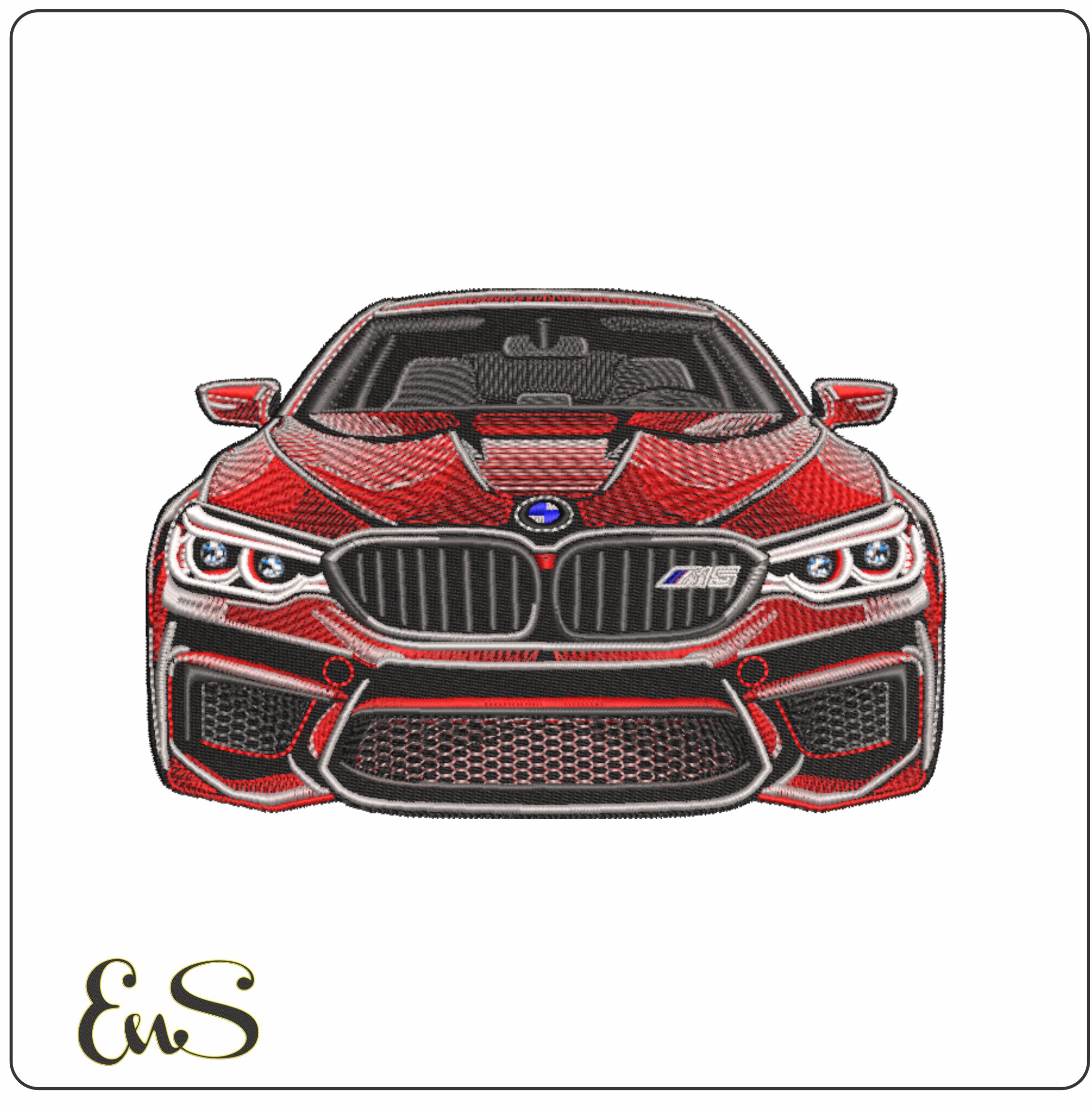
Club organizers especially will appreciate the membership tiers, which let you download multiple size variations and design styles in a single session. Instead of piecing together separate purchases across multiple storefronts, you can grab your chest logo, sleeve badge, and back panel design all at once. For anyone building out a BMW Car Line Art Embroidery Design apparel line, that kind of efficiency is genuinely hard to beat. Start browsing, stitch confidently, and enjoy the results.
Conclusion
Getting BMW embroidery right comes down to a few essential principles. First, always prioritize digitizing quality over price. Second, verify file format compatibility with your specific machine before purchasing. Third, understand the fabric you're working with so the design holds up beautifully over time. Finally, stay informed about licensing to protect your projects and your reputation.
The difference between a stunning finished piece and a disappointing result often starts long before the needle hits the fabric. It starts with the choices you make at the buying stage.
Now it's your turn to put this knowledge to work. Browse with confidence, ask the right questions, and invest in designs that truly match your skill level and vision. Your next BMW embroidery project deserves nothing less than the best possible foundation. Go create something worth showing off.